.png?width=112&height=112&name=Image%20Hackathon%20%E2%80%93%20Horizontal%20(67).png)


Wondering how to start a blog that gets read, gets clicks, and actually leads to conversions?
I started blogging back in 2009 — completely by accident — when I was looking for a way to keep track of my favorite recipes. That food blog evolved into a lifestyle blog and led to a career writing content and copy for hundreds of clients, including HubSpot.
→ Download Now: 30 Free Blog Post Templates
The internet has changed a lot since I first hit publish (we didn’t even have Instagram yet), but one thing hasn’t — good blog content still works.

So today, I’m walking you through how to start a blog the right way — without wasting time, chasing trends, or letting AI write a word salad on your behalf. Whether you’re writing to grow your business, build your brand, or turn one post into a partnership, this is the place to start.
Table of Contents
- What is a blog post?
- How to Start a Blog
- What makes a good blog post?
- How to Write Your First Blog Post: Getting Started
- Blog Format Guidelines
- Blog Post Examples
- Quick Blog Writing Tips
What is a blog post?
A blog post is a piece of written content published on a website, typically covering a specific topic to inform, educate, or engage readers.
That’s the simple, sanitized, boring definition.
In my experience, blog posts can do so much more — building trust and community, establishing authority and thought leadership, and yes, driving traffic and leads. (Shoutout to inbound marketing.)
They help you get found and stay top of mind with your audience — and (hopefully), keep people coming back for more.
Despite — or maybe even because of — AI’s growing popularity, blogging is nowhere near dead.
Your blog isn’t just for readers anymore — it’s feeding the bots, too. And I think that’s good news.
LLMs like ChatGPT and Gemini are trained on public web content, including blog posts, often pulling from that same content when generating answers.
When people actually enjoy your content — stick around, scroll, click — that behavior sends signals that your post is worth recommending. The better the experience, the more likely your blog is to show up in both search engines and AI-driven responses.
According to HubSpot’s 2025 State of Marketing Report, blog content ranked among the top-performing channels for ROI, alongside SEO and website strategy. And while blog posts may not be the flashiest format out there, nearly 1 in 5 marketers still rely on blogs as a core part of their content mix.
.png)
6 Free Blog Post Templates
Save time creating blog posts with these free templates.
- "How-to" Post
- "What is" Post
- Listicle Post
- And More!
Download Free
All fields are required.
How to Start a Blog
I started my first blog the scrappy way — copy-pasting code into a Blogspot theme and hoping for the best. Since then, I’ve helped launch blogs on self-hosted WordPress sites, optimized content for SEO, and built editorial systems that actually work.
Whether you're starting from scratch or finally getting serious about strategy, these steps will help you build a blog that’s both technically solid and ready to publish content people want to read.
1. Understand your audience.
Before you think about keywords, categories, or even post topics, take a step back and ask: Why are you blogging in the first place?
Your “why” shapes your “who.”
If someone said, “You should start a blog,” and you’re doing just that, fantastic. But I recommend first identifying your goals in blogging:
- More leads?
- Building a personal or business brand?
- Positioning yourself as an authority?
- Educating your current or future customers?
- All or none of the above?
Whatever your answers, they’ll help you figure out who your blog is for and what they need from you.
Once you’re clear on that, start your market research. This doesn’t have to be fancy. You can use market research tools or simply spend focused time learning more about what people are searching for, reading, or sharing. I absolutely love platforms like Reddit for learning more about your audience and how they talk about their problems.
This is also where buyer personas come into play.
"Buyer personas can be a handy way to keep a human in mind while you’re writing. Coordinate your personas with your marketing and sales teams. Chances are that your existing customers are exactly the kind of people you want to attract with your writing in the first place,” says Curtis del Principe, user acquisition manager at HubSpot.
Even a simple persona that maps out who your buyer is, what they know already, and their pain points can make a BIG difference. I’ve found all kinds of great topic ideas and content just from seeing what people are asking. As you get to know your audience more, it will get easier to write content that speaks to them.
Don't have buyer personas yet? Start here:
- Create Buyer Personas for Your Business [Free Template]
- Guide: How to Create Detailed Buyer Personas for Your Business
- [Free Tool] Make My Persona: Buyer Persona Generator
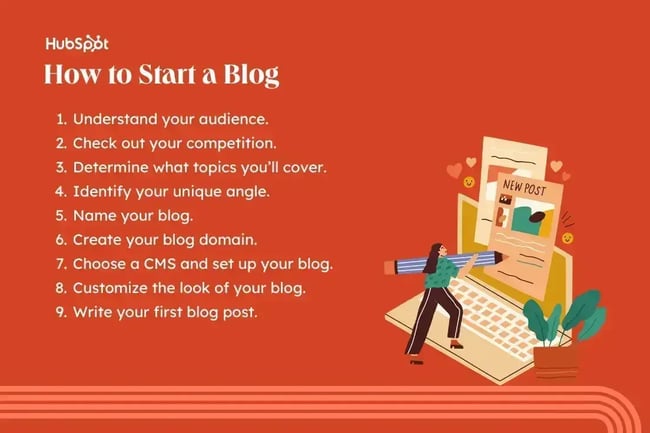
2. Check out your competition.
It’s not quite time to start writing yet. I also want you to take some time to see what else is out there.
But, don’t get discouraged if you see your space is “oversaturated” or, on the flip side, if there’s no one in your space yet.
I always joke that there’s a market for everything because my husband watches YouTube videos of people boiling water. Granted, there’s hops in the water — because he’s a homebrewer, but it’s still…boiling water.
Lots of blogs in your space means that there’s an established market and you have an opportunity to add your voice and perspective to something people are searching for already.
A less established space might mean you have to work a bit harder to draw people in but they’ll likely be superfans...and more importantly, you have the opportunity to truly stand out.
Here’s what I recommend using as a guide during this phase:
- Are they really a competitor?
- What tone and style are they using?
- How is the blog visually presented? (think layout, color palette, and branding)
- What topics are they covering (and repeating)?
- What’s getting shared or ranking in search?
Remember, this is mostly to get a sense of what’s out there, not an absolute guide to follow for your own content.
3. Determine what topics you’ll cover.
Picking a topic can be challenging, but I find that getting started is always the hardest part. And whatever your starting point is, you’re not married to it for life.
Not sure what to cover? I always teach a content strategy where 90% of your content relates directly to your business and what you want to be known for. If you’re already known for it, great! You can have a lot of fun with your content.
But if people introduce you differently, bridging that gap is your starting point. And if you still need more ideas, here are a few jumping-off points:
- Write what you know. Just be sure to figure out the baseline of what your audience already knows and go from there.
- Answer questions your audience is asking. Whether you find the topic on social or using Google’s autocomplete feature, it’s a great place to start.
- Start with what’s working. If your competitors are covering a topic, you can too. Plus, your lived experience adds value to your audience.
- Make sure your topics matter to your readers. Del Principe suggests checking with sales and service teams for ideas. "What kinds of things do they wish customers already knew? What kinds of questions do they get asked a thousand times?” If you’re not serving their needs, then you’re shouting into the void — or, worse, attracting the wrong readership.
- Use keyword research to guide you. Search for topics using a keyword research tool and see if there’s search demand. Topics that sit between your expertise and your reader’s needs are gold — but it’s fool’s gold if people aren’t searching for those keywords.
Pro tip: If you need help brainstorming ideas or lack inspiration, use HubSpot’s AI-powered blog topic generator. You’ll get title ideas and outlines based on a brief description or a specific keyword.
4. Identify your unique angle.
When I’m speaking or telling my story, I always say “All roads led me to this point,” usually after joking that my career path reads like two truths and a lie.
No one else has my perspective, insights, or approach because no one else has the exact same lived experience that I do. The same is true for you.
This takes time and deep work to develop, so if you haven’t figured out your positioning yet, it’s probably not going to happen overnight. Be patient and don’t stress about wordsmithing it into oblivion.
This is a case where action is better than perfection.
I recommend telling your story and developing a preliminary unique selling proposition to share exactly why people should be paying attention to you and what you bring to the table.
A few ideas:
- Write a professional and personal bio and “About me” page to tell your story.
- Get clear on the problem(s) you’re solving. What kinds of things can readers expect to learn from you?
- Choose an editorial approach. Your blog topics and the problems you’re helping your readers solve will inform the editorial approach you choose. For example, if your goal is to keep marketers up-to-date on the latest changes, then you’ll likely take a journalistic approach.
5. Name your blog.
Naming your blog can be fun — or maddening. The first name I had for my food blog was “The Daily Lentil.” That lasted about 5 minutes.
I’ve seen people get stuck on this step for weeks trying to find the “perfect” name. Here’s my advice: don’t let it hold you back.
If you’re writing a blog for an established business, it’s totally fine to keep it simple. You can literally call it “Blog.” Clarity beats cleverness, especially when people are navigating your website.
But if you’re creating a personal or standalone blog, it’s worth putting a little thought into the name — because it sets the tone and gives readers a hint of what to expect. And it’s worth your while to get the title and URL right from the get go, because rebranding can be a royal pain.
Here are a few things to keep in mind:
- Make it easy to say, spell, and remember. Creativity is great, but not if it comes at the cost of clarity. Your blog name should also work well as a clean, readable URL.
- Connect it to your brand or message. The closer your name is to what your blog is about, the better. For example, DIY MFA covers writers pursuing the concepts of a Master of Fine Arts in writing program on their own. Your name should allude to your blog’s message, value proposition, and covered topics in one fell swoop.
- Tie it to your audience’s goals. What do your readers want to learn, solve, or achieve? A good blog name speaks to that journey, even if it’s metaphorical.
Pro tip: Stuck? Use a blog name generator or generative AI tool like ChatGPT. Just make sure you check domain availability early — there’s nothing worse than falling in love with a name that’s already taken.
Which brings me to step 6.
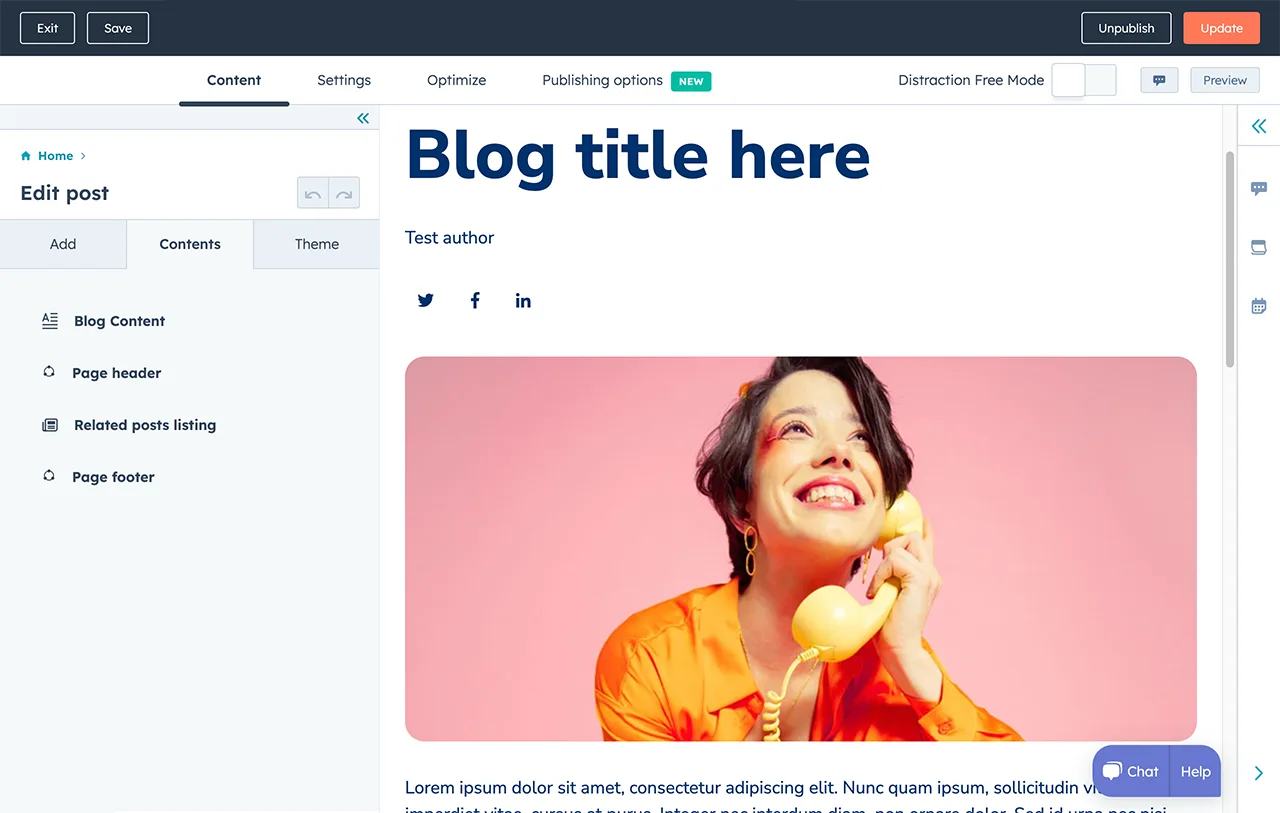
HubSpot's Free Blog Maker
Drive traffic and awareness by creating an SEO-friendly blog for your business.
- Build a professional blog without coding or design experience
- Customize your design to match your brand with themes
- Increase brand awareness with high-quality SEO content
- Create blog posts using generative AI
6. Create your blog domain.
Quick definition time: your blog’s domain is the URL. If you’re starting from scratch, you’ll need to choose and register a domain name. Most hosting platforms (like GoDaddy, Namecheap, or Google Domains) make this pretty straightforward and affordable.
Want to create a subdomain for your blog?
Some content management systems (CMS) offer subdomains as a free service, where your blog lives on the CMS instead of your business' website. For example, it might look like this: blog.yoursite.com.
You could also tie your blog to your primary domain. For instance, if you already own a cooking business at www.yourcompany.com, you might create a blog at: blog.yourcompany.com. This format can boost your blog’s SEO benefits.
However, you’ll need to register your subdomain with a website host. Most website hosting services charge very little to host an original domain.
Pro tip: You can connect your custom domain to free hosting with HubSpot’s free CMS or in premium editions of Content Hub . This includes access to built-in security features and a content delivery network (CDN).
7. Choose a CMS and set up your blog.
Starting a blog for free on a platform like WordPress.com is fine if you‘re doing something personal. But if you’re going the business route, or ever want a profit, you want your own domain and to host your blog...regardless of what platform you use.
A CMS is a software application to build and maintain your website without having to code from scratch.
If you’re blogging for personal reasons, starting for free on a platform like WordPress.com is totally fine.
But if you’re creating a business blog — or even think you might monetize your blog in the future — you’ll want your own domain and your own hosting, no matter which platform you use. It’s more professional, gives you more control, and sets you up for long-term growth.
HubSpot customers host web content via Content Hub. Another popular CMS option is a self-hosted WordPress website on a hosting site such as Hostinger or WP Engine.
Pro tip: You can get started for free with HubSpot’s free blog maker. Our free CMS offers everything you need to get started, including hosting, a visual editor, and hundreds of free and paid themes.
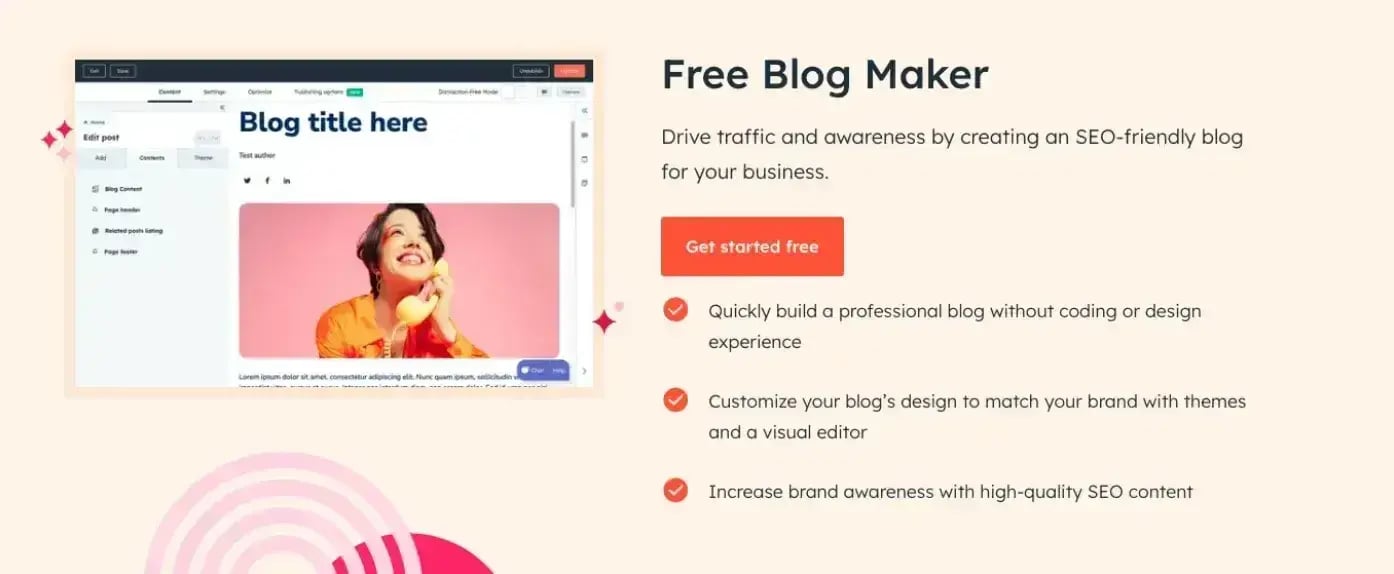

Start using HubSpot's Free Blog Making tool to publish blog posts.
8. Customize your blog’s appearance.
Once your blog is set up, take a little time to make it look like you. The design should reflect your content and your brand — especially if you’re building trust with new readers or integrating your blog into an existing website.
If you’re writing about sustainability, for example, you might lean into earthy colors and clean visuals. If you’re writing about tech trends, a bold, modern layout might be a better fit. The goal is consistency, not perfection.
Already have a website? Make sure your blog feels like part of it — visually and tonally. That means matching fonts, colors, and voice across the board.
Don’t forget to spend time pulling together your logo and your “About” page.
9. Write your first blog post.
Your blog is set up — well done! Now you need content.
While the design and layout are fun and functionally necessary, the content is what draws in your readers and keeps them coming back.
I’ll go into detail on this point later.
What makes a good blog post?
A good blog post is engaging and helpful. When you can people on the page entertained, educated, or interested, you’ll make the algorithm gods happy. Google rewards content that does well against its E-E-A-T framework — or content that shares experience, expertise, authority, and trustworthiness.
Remember that lived experience I mentioned above? This is where that comes into play.
For example, your introduction should hook the reader and make them want to continue reading while teaching them from your point of view..
Want to learn how to apply blogging and other forms of content marketing to your business? Check out HubSpot Academy's free content marketing course.
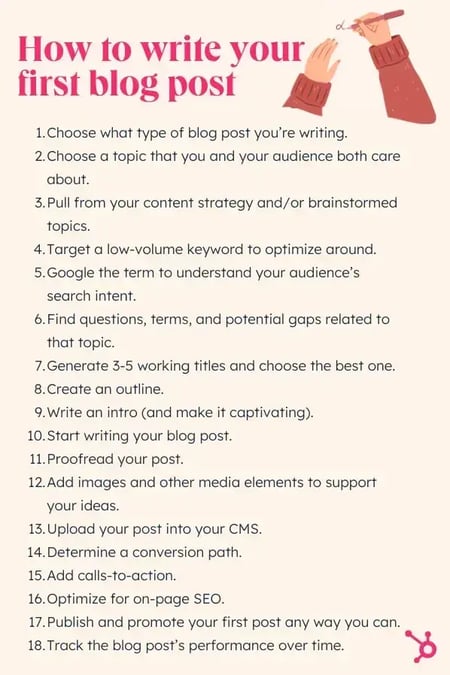
How to Write Your First Blog Post: Getting Started
- Choose what type of blog post you’re writing.
- Choose a topic that you and your audience both care about.
- Pull from your content strategy and/or brainstormed topics.
- Target a low-volume keyword to optimize around.
- Google the term to understand your audience’s search intent.
- Find questions, terms, and potential gaps related to that topic.
- Generate 3-5 working titles and choose the best one.
- Create an outline.
- Write an intro (and make it captivating).
- Start writing your blog post.
- Proofread your post.
- Add images and other media elements to support your ideas.
- Upload your post into your CMS.
- Determine a conversion path (what you want your audience to do next).
- Add calls-to-action to guide your audience to take action.
- Optimize for on-page SEO.
- Publish and promote your first post any way you can.
- Track the performance of your blog post over time.
You’ve solved the practical tidbits of how to start a blog. Now…ready, set, write! Ehhh, not quite. #sorrynotsorry
Not all blog content is created equal. So while I’m a huge fan of diving in, I also want you to understand what makes a blog post good.
But before we go any further, take these guidelines below as suggestions not rules set in stone. They’re a great lens for planning blog topics and writing content. But how you implement them in your writing is up to you.
1. Choose what type of blog post you’re writing.
Blog posts come in many forms — there’s no one-size-fits-all structure. Choosing a format helps guide how you present the information. Of course, if you just start writing, the type may determine itself.
Here are some of the most common formats:
- The List-Based Post (Listicle): Example: 7 Simple Ways to Build Better Habits
- The “What Is” Post (Definitions or Explainers): Example: What Is Email Segmentation (and Why It Matters)
- The Pillar Page Post (“Ultimate Guide”): Example: The Ultimate Guide to Content Strategy
- The Newsjacking Post: Example: What [Popular Movie] Teaches Us About Brand Nostalgia
- The “How-To” Post (Tutorials or Instructions): Example: How to Launch a Lead Magnet in 24 Hours
- Opinion / Thought Leadership Post: Example: Why “Authenticity” in Marketing Is Missing the Point
- Curated Collection/Roundup Post: Example: 10 Smart Marketers You Should Follow on LinkedIn
- Case Study / Storytelling Post: Example: How We Increased Webinar Signups by 312% (Without Paid Ads)
- Comparison Post: Example: Substack vs. WordPress: Which Platform Is Right for Your Blog?
- FAQ / Problem-Solving Post: Example: Should You Start a Blog in 2025? (Spoiler: Yes)
- Behind-the-Scenes or Personal Post: Example: What Writing a Blog Post Every Week Taught Me About Focus
And, you might just find your own rhythm blends a few of these together from time to time. Mine do!
Save time and download blog post templates for free.
2. Choose a topic you and your audience both care about.
Your topic can be more general to start. If your company sells a CRM for small-to-enterprise businesses, your post might cover using a single software to align your marketing, sales, and service teams.
Some people argue against writing a “how-to” as your first blog post because you don’t have credibility yet.
I disagree. How-to posts are some of the easiest to write when it’s about things you know well. And if your audience wants to know, then dive on in.
That said, I have two problems with how-to posts:
- They can get prohibitively long…because where do you stop??
- AI makes it easier to get the how-to answers without doing a lot of digging.
So what should you do instead?
I encourage you to think about how you approach the problem and share that.
- What mistakes do people make?
- What should they consider before they jump in?
- How do you approach that topic or problem?
If you teach them how to think about things, you’re delivering more value and showing how you think, which means they’ll reach out to you when it’s time to call in an expert.
Pro tip: Still stuck on topics? Do a free writing exercise where you set a timer, say 10 minutes, and jot down all the topics you can think about and then narrow them down to one that’s interesting to you.
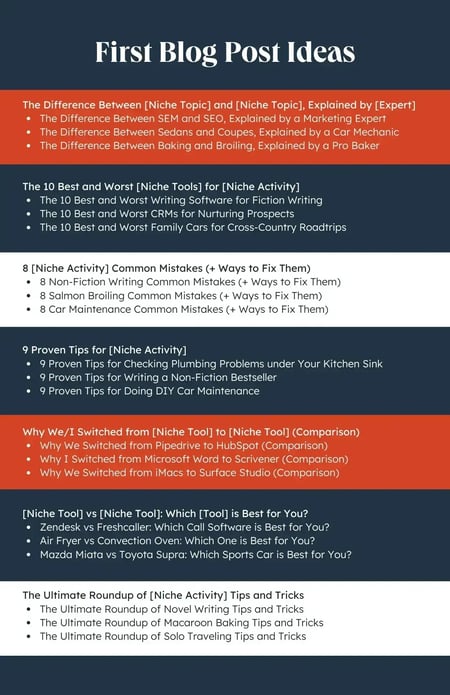
Also, remember to review what you know about your buyer personas and their interests while you're coming up with a topic for your blog post.
3. Pull from your content strategy and/or brainstormed topics.
If you’ve already mapped out a content strategy — or jotted down post ideas during a brain dump — this is the time to use it.
I like to review content performance data to find out what performs better with my audience. But when you’re first starting out, I recommend focusing on your core blog topics, or clusters, to start gaining traction and building trust with your audience.
4. Target a low-volume keyword for optimization.
Want your first post to rank? Don’t hold your breath.
I hate giving people the bad news, so let me temper that statement.
It can happen, but unless you’re Kardashian-level famous already, it won’t happen overnight.
Maybe that wasn’t the answer you wanted, but search engine performance takes time to build. Take the opportunity to get comfortable with writing blogs and find your rhythm.
But how can you create content where you’re most likely to rank well?
Start with a low-volume, low-competition keyword — ideally one with 10–150 monthly searches. These topics offer less competition, allowing your new blog post to rank more easily. And you’re more likely to get traction with less competitive, long-tail keywords like “How to choose the best hat for the beach,” instead of “beach hats.”
Here’s how to find one:
- Pick a broad topic (e.g. plumbing, email marketing, self-publishing)
- Drop it into a keyword tool like: Ahrefs, Moz, or Ubersuggest
- Dig through related keywords and drill down
- Look for something specific that still matches your expertise and audience’s interest
Example: Plumber → “under sink plumbing” → “plumbing problems under kitchen sink” (10 monthly searches)
That’s a great starting keyword for your first post.
Want more help with keyword research?
Check out these articles:
- How to Do Keyword Research for SEO: A Beginner's Guide
- How to Perform Keyword Research and Rank
- Top Tools For Finding Long-Tail Keywords
6 Free Blog Post Templates
Save time creating blog posts with these free templates.
- "How-to" Post
- "What is" Post
- Listicle Post
- And More!
Download Free
All fields are required.
5. Google the term to understand your audience’s search intent.
If someone is looking for “plumbing problems under kitchen sink,” they might be looking for a tutorial, a diagram, an article, or a product that can fix the issue.
If they’re looking for the first three, you’re good — a blog post can cover it. And you can even embed a video!
A product, however, is different, and your blog post won’t rank.
If the search results are full of product pages or shopping carousels, it’s a sign that blog content isn’t what searchers want — and your post likely won’t rank.
How do you double-check search intent?
- Google the keyword
- Scan the top results
- If they’re mostly blog posts, articles, or guides, you’re in the right place
- If they’re mostly product listings or roundup-style commerce pages, pick a new keyword
TL;DR — Before writing your first blog post about a low-volume topic, double-check the user intent by Googling the keyword. Also see who’s written about that topic so far. If you see a major brand, consider another topic.
6. Find questions, terms, and potential gaps related to that topic.
It’s time to flesh out your topic by covering related or adjacent topics. Use the following tools:
- Answer the Public. Put in your keyword and receive a list of questions related to that term.
- Google Search. Search for your term and look under “People also ask” and “People also search for.” Touch upon those topics in the post.
- Reddit. See what questions people are asking…and then use your blog post to answer them
When researching a topic, I’ll often:
- Do a competitive analysis of the top 5-10 articles
- Identify weak spots — like outdated info, missing visuals, shallow advice
- Ask myself: How can I make something better?
You don’t have to reinvent the wheel. But you do need to make your post more useful, current, or user-friendly than what’s already out there.
Focus on beating your competitors in:
- Answering real user questions
- Providing more depth or clarity
- Offering newer or better examples
- Using richer media (images, video, infographics)
- Creating a smoother reading experience
Those little upgrades add up — and can help your blog stand out, even on day one.
7. Generate 3-5 working titles and choose the best one.
I obsess over clickability.
Whenever I teach content writing — blogs, emails, or social — I tell people, “No one will know how good (or not) your content is if you have a terrible headline.”
We are all overloaded with content. So yours has to stand out with a great, clickable title. Otherwise, what’s the point of spending all this time and energy writing something great?
Here are three rules I follow when writing blog post titles:
- Include the keyword (or some variation)
- Set expectations about the content you plan to write
- Generate intrigue (aka the clickability factor)
If 3-5 headlines don’t get you there, write more. My friend Justin Blackman wrote 100 headlines a day to build the skill — and it worked.
I highly recommend Justin’s approach. But if you don’t have that kind of time, AI can help you shortcut the process. Whether I’m writing email subject lines or blog titles, I often use ChatGPT to brainstorm. Here’s a sample prompt:
“My blog covers [main topics] and is written for [audience]. I’m about to write a blog post about [topic], and need help generating titles that are clickable, descriptive, and include related keywords. Please give me 20-30 options and separate them into descriptive, urgency-focused, playful, and educational.”
From there, I usually mix and match to find one that works best.
8. Create an outline.
When you’ve got a great idea, it’s tempting to just start writing. But trust me — a quick outline will save you time and frustration later.
There is nothing worse (okay, there’s a lot worse, but…hyperbole) than realizing you forgot half of the key points you meant to include.
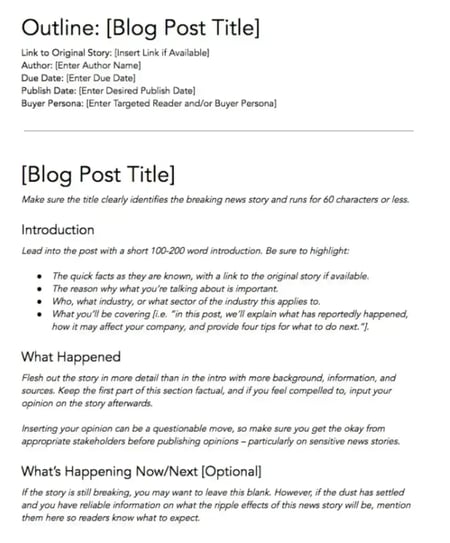
Download This Template for Free
Even a simple structure can help your post feel easier to write and read, not to mention ranking on Google.
Even if your focus isn’t 100% on SEO, I highly recommend optimizing your post content so search engines can read them. That means using H2 and H3 tags appropriately, and nesting in H4s where appropriate to create a hierarchical structure.
What does that even mean?
Have a look at "How to maintain authenticity in your social media strategy — even with AI."
There’s a lot of content in the piece, so it’s divided into a few sections using descriptive headers that are further separated into subsections.
Here’s the TL;DR:
Topic: How to maintain authenticity in your social media strategy — even with AI
- H2: How AI Can Level Up Your Social Media
- H2: How to Maintain Authenticity When Using AI
- H3: Use descriptive AI prompts.
- H3: Ask for multiple versions.
- H3: Create rules or custom GPTs for different types of copy.
- H3: Share your experiences.
- H3: Take it one prompt at a time.
- H3: Feed AI a transcript of you talking.
- H3: Use AI for social listening.
- H3: Add a human touch and oversight to every post.
- H2: When You Should Avoid AI
- H3: The comments section or DMs
- H3: Original thought leadership
- H3: Copy and paste situations
- H3: When you’re telling personal stories
- H3: When you have to be spot-on in your messaging
- H2: Being Transparent About How You Use AI
You don’t have to get fancy. Just map out what you want to say — and how you want to walk the reader through it.
Need help getting started?
Grab one of HubSpot’s free blog post templates to give yourself a quick jump start.
9. Write an intro (and make it captivating).
Remember what I said about the title? Same goes for your intro. You’ve also got to make sure to include that keyword early on to appease SEO best practices.
But what should your intro do to be truly captivating?
- Start with something that grabs their attention — maybe a quick story, surprising stat, bold take or statement.
- Make it relevant — why this post? And why right now?
- Share WIIFM — specifically, what are they going to get out of this article?
Intros can be short or long as long as they aren’t overloaded with fluff.
10. Start writing your blog post.
Now … it’s time for Ready, Set, Write!
With a detailed outline and solid intro, you're ready to fill in the blanks with your expertise.
Remember to use examples and accurate data to support your points while providing proper attribution.
This is where your voice gets to shine with anecdotes, humor, and whatever else makes you come to life.
And, if you’re struggling to string sentences together, you’re not alone. Finding your “flow” challenges most writers. I’ve been known to type “blah blah blah” or “words go here” when I’m not sure what to say about a point…or to even add half-baked bullet points to flesh out the outline further.
And hey, a few bullets can be a good thing since they make your post more skimmable and easier to read.
Pro tip: If you use “blah-blah-blahs” as filler, highlight them in yellow so you don’t forget to fix them later. Learn from my “words go here” mistakes.
There are also some great tools that can improve your writing:
- HubSpot's AI Blog Writer. This tool simplifies the process of creating SEO-friendly and engaging blog content, which is crucial for connecting with your audience and enjoying the benefits of blogging.
- Power Thesaurus. Stuck on a word? Power Thesaurus is a crowdsourced tool that offers alternative word choices borne from a community of writers.
- ZenPen. ZenPen creates a minimalist “writing zone” designed to help you get words down without fussing with formatting.
- Cliché Finder. Does your writing feel cheesy? Identify instances where you can be more specific using this handy cliché tool.
Also, refer to our complete list of tools for improving your writing skills.
And for even more direction, try:
- Copywriting 101: 6 Traits of Excellent Copy Readers Will Remember
- How to Write Compelling Copy: 7 Tips for Writing Content That Converts
- How to Write With Clarity: 9 Tips for Simplifying Your Message
- The Kurt Vonnegut Guide to Great Copywriting: 8 Rules That Apply to Anyone
11. Proofread your post.
Good ideas get attention. Great editing keeps it.
I self-edit as I go, but I always recommend getting a second set of eyes on anything before it goes live. You’ve been staring at the draft too long — you will miss something.
If you don’t have a trusted editor on hand, no problem. Tools like Grammarly or Hemingway can help flag awkward phrasing, repeated words, and grammar issues. Even reading your post out loud works wonders.
A few rules:
- Make sure everything is clear.
- Clean up any typos or errors
- Tighten up any areas where you’ve rambled
- Check your links
Or check out this post to improve your self-editing skills: How to Become a More Efficient Editor: 12 Ways to Speed Up the Editorial Process
12. Add images and other media elements to support your ideas.
A good experience supports a great blog post — visual elements and formatting make your articles easier to read.
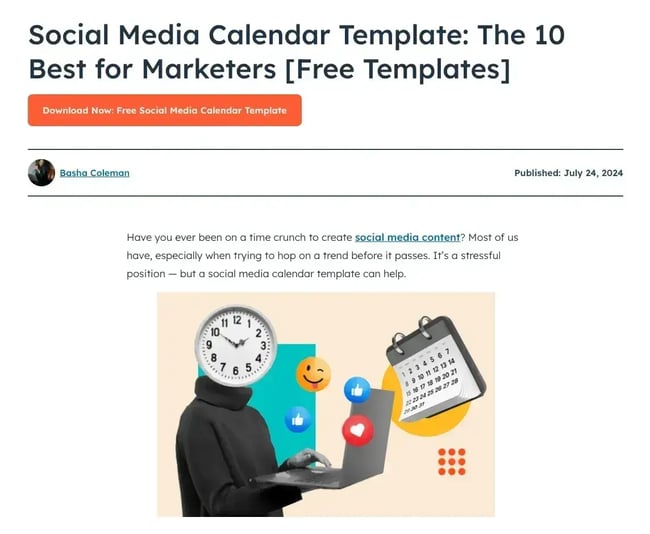
Featured Image
This is what shows up when someone shares your post, so make sure it’s relevant and polished. My VA and I love using Canva for these!
Clean Formatting
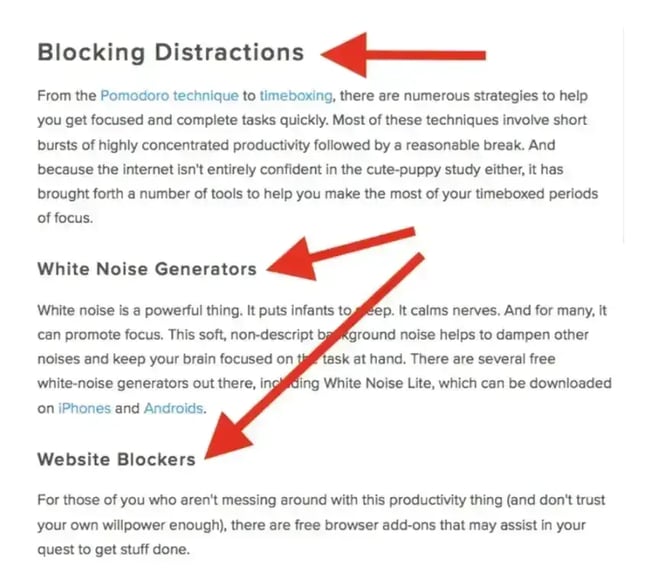
Big walls of text are overwhelming to the reader. Break things up with headers, bullets, and short paragraphs. Use bold or italics to guide the reader’s eye — but sparingly.
Here's an example of what that looks like:
Topics and Tags
Don’t go overboard, but pick 1-3 tags or categories that help readers (and your CMS) know what this post is about. Think big-picture topics, not a laundry list of keywords.
Think of tags as “topics” or “categories,” and choose 10-20 consistent tags that represent the main topics you want to cover on your blog.
13. Upload your post to your CMS.
This is where it all comes together.
Once your content is ready, pop it into your CMS (like WordPress, HubSpot, or Squarespace). But don’t just copy and paste and hit publish — this is your last line of defense.
Here’s what I do at this stage:
- Re-skim the post for any sneaky typos or formatting issues — spacing can be a real joy (not!)
- Double-check my headers — especially H2 vs H3
- Preview the post on both desktop and mobile
- Confirm that my links, meta description, alt text, and title tag are good to go
You can publish right away or schedule it for later. Personally, I like scheduling ahead to stay consistent with my content calendar, but do what works for your workflow.
6 Free Blog Post Templates
Save time creating blog posts with these free templates.
- "How-to" Post
- "What is" Post
- Listicle Post
- And More!
Download Free
All fields are required.
14. Determine a conversion path (what you want your audience to do next).
You’ve got their attention — now what?
Every blog post should guide readers toward something. That “something” depends on your goals. Are you:
- Trying to grow your email list?
- Promoting a free download?
- Driving signups for a webinar?
- Encouraging them to book a call?
Think of it like this: Don’t leave your reader hanging. A clear next step helps you build trust and momentum.
I like to plan this early — often before I start writing — so the whole post leads naturally toward the CTA.
Need help mapping this out? Try this post: How to Create a Conversion Path That Actually Converts.
15. Add calls-to-action to guide your audience to take action.
You know what they say happens when you assume.
Never assume your readers will know what to do next.
Whether someone just found you or they’re a loyal fan, every blog post is an opportunity to deepen the relationship. That’s where a good call-to-action (CTA) comes in.
Your CTA doesn’t have to be a hard sell. It just needs to make the next step clear and valuable.
A few ideas:
- Invite them to join your list so they don’t miss your next post
- Share a free resource to help them go deeper on the topic
- Encourage them to book a call, register for a webinar, or check out a product
- Point them toward a related blog post to keep them engaged
Make sure your CTA ties into your goals and the reader’s journey. If they’ve just learned something helpful, what might they want to do next?
To make a CTA that readers want to click, check out our list of effective call-to-action examples.
16. Optimize for on-page SEO.
Now that your post is written, it’s time for a little behind-the-scenes polish. On-page SEO helps search engines and readers find and understand your content.
You don’t need to obsess over keyword density (please don’t), but do make smart choices. Here’s a quick blog SEO checklist:
17. Publish and promote your first post any way you can.
Now’s your chance to make sure people actually see your post.
Start with a promotion plan. Where does your audience hang out? How do they consume content? Use that info to share your post in the places that make the most sense.
Here are a few tried-and-true ways to get it out there:
Other channels to expand your blog post promotion strategy include:
- Social Media Marketing. Sharing your content on the most popular social media networks like X, Instagram, TikTok, etc.
- Email Marketing. Sharing the newest post with your email subscribers.
- Boosted Posts or Paid Ads. Allocating budget toward advertisement on search engines.
- Word of Mouth Marketing: Actively influencing people to read your content organically.
Promotion isn’t just a one-time blast. Keep showing up with the same blog in different ways — especially if it’s evergreen. HubSpot often posts YouTube videos — like some of those that I’ve embedded into this post.
Here are more blog post promotion resources:
- 12 Tried-and-True Ways to Promote Your Blog Posts
- 10 Sites You Can Use for Free Blog Promotion
- 9 Link Building Email Outreach Templates That Actually Work
- Inbound Link Building 101: 34 Ways to Build Backlinks for SEO
- 11 Creative (But 100% White Hat!) Ways to Earn Backlinks
- How to Create a Social Media Promotion Strategy
18 . Track your blog post’s performance over time.
It might feel like publishing is the finish line, but it’s just the beginning. And promotion is only one part of your job.
To know if your blog is working, you have to track its performance over time — and not just traffic.
Here are the blog KPIs I like to watch:
- Total traffic – How many people are visiting?
- Traffic sources – Where are they coming from? (Search, social, email?)
- Click-through rate (CTR) – Are people clicking when they see it in search?
- Search queries – What terms are you ranking for?
- SERP position – Where’s your post showing up in results?
- Shares and comments – Are people engaging?
- Conversions – Did your post help turn readers into subscribers, leads, or buyers?
There are many website traffic analysis tools you can use to better understand your audience’s behavior on your blog posts.
Most platforms have built-in analytics, or you can use something like HubSpot's Marketing Analytics to keep an eye on performance across the board.
Blog Format Guidelines
- Include H2s to arrange ideas.
- Center your images.
- Add alt text.
- Keep your sentences clear and concise.
- Use media with purpose.
Formatting keeps readers engaged, improves SEO, and helps your message land. Here’s how to make your post more inviting from start to finish.
1. Include H2s to arrange ideas.
Divide your paragraphs into sections to make it easier for the reader to find what they need.
If you’re just starting out, then focus on the primary H2s. You can branch off into sub-headers more naturally as you continue writing.
2. Center your images.
Centering your images keeps the reader’s attention drawn to the subject and makes your content look more professional.
3. Add alt text.
Image alt text helps search engines understand your content and helps people who use screen readers visualize it. Don’t skip it.
Keywords can be helpful, but only when relevant.
4. Keep your sentences short and concise.
Chances are that if you keep it concise, readers will get more value from your work.
5. Use media with a purpose.
Images, charts, videos, polls — they should all add to the reader’s understanding.
Done right, it makes for a more interactive blog and improves your on-page SEO.
Now, how about real examples of blog posts?
Blog Post Examples
- List-Based Post
- Thought Leadership Post
- Curated Collection Post
- Slide Presentation Post
- Newsjacking Post
- Infographic Post
- How-to Post
- Guest Post
1. List-Based Post Example
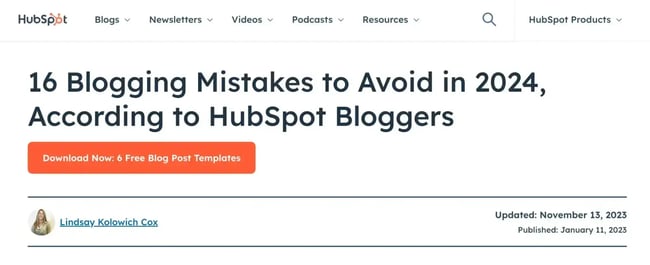
List-based posts are sometimes called “listicles,” a mix of “list” and “article.” A listicle uses sub-headers to break down the blog post into individual pieces, helping readers skim and digest your content.
2. Thought Leadership Post
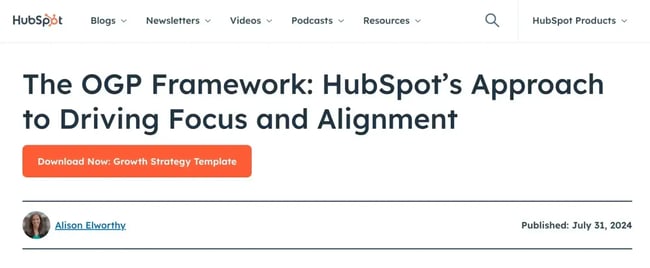
Thought leadership posts let you share your expertise and firsthand knowledge on a particular subject matter with your readers. These posts help build trust with your audience so people take your blog seriously.
3. Curated Collection Post
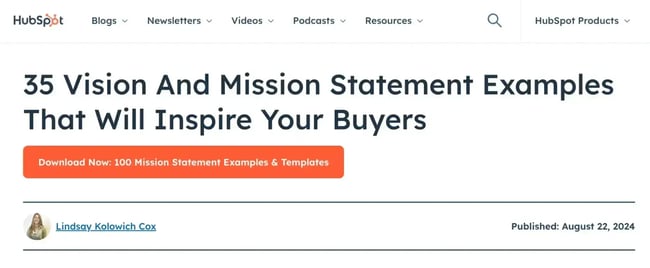
Curated collections are a special type of listicle blog post. Rather than sharing tips or methods for doing something, this type of blog post shares a list of real examples with something in common in order to prove a larger point.
4. Slide Presentation Post

Slide decks alone usually rank poorly on search engines. They need a platform for getting their message out to interested users. By embedding and summarizing your slides on a blog post, you can share a great deal of information and give it a chance to rank on Google at the same time.
5. Newsjacking Post
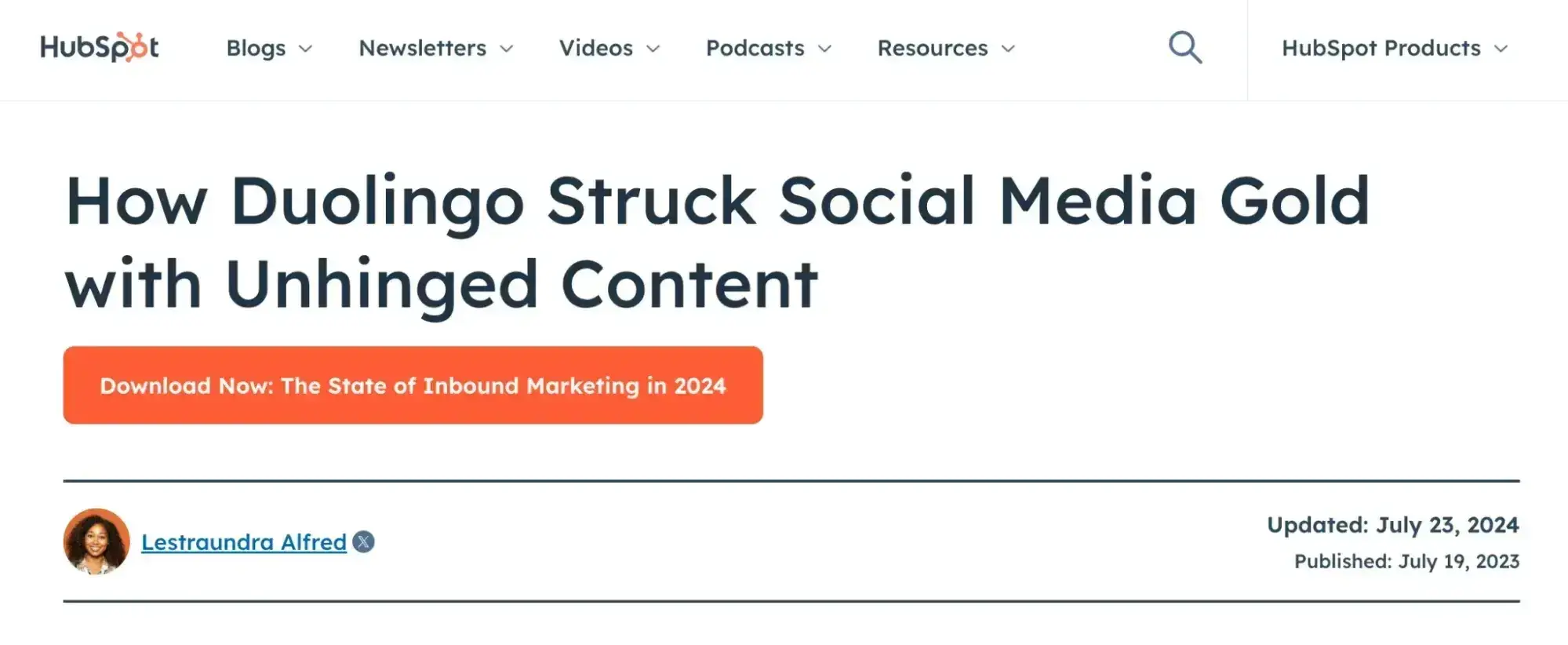
“Newsjacking” is a nickname for “hijacking” your blog to break important news related to your industry or tie your content and ideas to something newsworthy.
.
6. Infographic Post
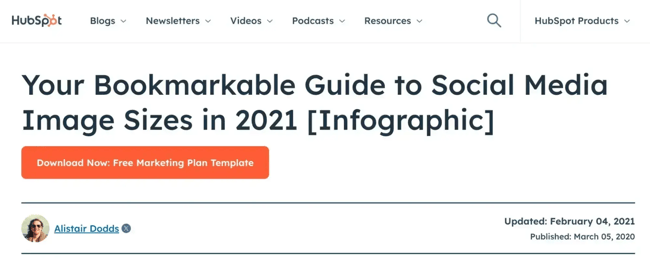
I am obsessed with infographics. They do such a great job of relaying information visually.
There are several times they are helpful, but in my opinion, none better than when you want to share statistics without boring or confusing your readers. It also helps readers remember the information long after they leave your website.
7. How-to Post
For this example, look no further than this very blog post. How-to guides like this one help solve a problem for your readers.
They’re like a cookbook for your industry, walking your audience through a project step by step to improve their subject matter literacy. The more posts like this you create, the more equipped your readers will be to work with you and invest in the services you offer.
8. Guest Post
Guest posts are a way to include other voices on your blog or to borrow other people’s audiences to share your expertise.
A word to the wise: If you begin accepting guest posts, set up editorial guidelines to ensure they meet the same standards as your posts.
Quick Blog Writing Tips
If you’re staring at the blinking cursor wondering what to say… you’re not alone. (But the curse of the blinking cursor does have a nice ring to it…)
Whether you're stuck mid-draft or trying to make your content more useful, here are a few tips that have helped me write hundreds of blog posts — both for myself and for clients.
Tip #1: If you don’t know where to start, start by telling a story.
When in doubt, write what you know.
Stories help you ease into the topic, and they make your content more human. They also help readers connect, especially when you're tackling something complex or nuanced.
Tip #2: Include interesting quotes or facts that emphasize the subject.
The right quote or data point can do a lot of heavy lifting.
It gives your reader something to latch onto and shows you’ve done your homework.
When I need a quote, I often turn to colleagues or connections who work in that space — and yes, sometimes it’s as simple as sending a quick message on LinkedIn.
Tip #3: Make your content skimmable with digestible chunks.
Most readers aren’t reading every word. That’s okay.
Today, people have a very short attention span so your job is to make your content as easy to consume as possible.
Short paragraphs, clear subheadings, and bulleted lists can make your post easier to navigate — and more likely to be read through to the end.
And, I want you to take this to heart. It’s okay not to share everything you know about a topic. It’s hard to let go of your little darlings, but sometimes less is more.
Tip #4: Each sentence should convey a single idea.
Keep it simple, sweetheart.
If you find yourself using too many commas or getting lost in the middle, it’s probably a sign to break things up.
I like to use the Hemingway App to make sure my writing doesn’t get too dense or clunky.
Tip #5: Use the active voice.
Blog writing usually sounds a lot different than what you learned in school. Using an active voice makes it easier to keep things clear and readable — and it leaves the fluff in the rearview mirror.
Want to see it in action? Instead of saying “the product was loved by customers,” write “customers loved the product.”
Ready, Set, Blog
If you‘re launching a business blog, you’re building a long-term asset. Your first post doesn’t need to be perfect, but it should have purpose, and I’d recommend even having a few in the hopper before publishing.
But do publish them. Don’t just let them waste away in drafts or your SharePoint waiting for something to happen. You have to start somewhere.
When I wrote my first blog back in 2009, I didn’t have a detailed SEO strategy or editorial calendar — I just had a few recipes that I didn’t want to lose. It all evolved from there. That’s how most content programs begin. The polish comes with time, process, and iteration.
But the kind of momentum you’re after doesn’t come from one post or even three. It comes from showing up consistently, writing with your reader in mind, and aligning content with your broader business goals.
Every post you publish is a step toward clearer messaging, stronger visibility, and deeper trust — so start now, and keep going.
Editor's note: This post was originally published in October 2013 and has been updated for comprehensiveness.
6 Free Blog Post Templates
Save time creating blog posts with these free templates.
- "How-to" Post
- "What is" Post
- Listicle Post
- And More!
Download Free
All fields are required.