
Effective closing requires not just the right phrases but the right technique for the moment. Some prospects respond to urgency, others to a softer approach. This guide covers the basics of closing a sale and shares 18 sales closing techniques with real examples.
What is closing in sales?
Closing in sales is the final step of the sales process, where the prospect commits to buying and the deal converts into revenue. It is the moment when all prior work either pays off or falls short. Effective closing means confirming that the solution fits the buyer’s needs and guiding them calmly toward a decision they are already leaning toward.
.png)
Free Sales Closing Guide
An easy-to-use sales closing guide with three tactics you can use right away.
- Using an ROI calculator for your prospects
- How to ask confirmation questions
- Sales question templates you can use today
- And more!
Download Free
All fields are required.
Form not available
How to Close a Sale in Six Steps
When it comes to how to close deals faster, small tips can make a big difference. See the most helpful advice for closing deals below.
1. Identify customer needs.
Clearly defining the customer needs a product or service is intended to meet is the essential first step. Prospects who aren’t a fit for the offering don’t want to hear from a rep, and pursuing them wastes time and resources.
Once customer needs and pain points are clearly defined, it becomes possible to find specific prospects and businesses with those needs. These potential customers will be genuinely interested in what the solution offers.
2. Find the decision-maker.
Closing a sale starts long before a customer signs a deal. The first order of business is lead qualification.
Qualifying leads ensures reps speak with decision-makers who play a key role in buying a product or service. To effectively do this, teams need to develop an ideal customer profile (ICP).
When developing an ICP, include information like:
- Industry. Identify industries your product will best serve.
- Company size. Specify the number of employees a company should have.
- Location. State the locations of your audience.
- Revenue. Define a revenue range that makes a company a fit for your solution.
- Job title. List the common job titles of your ideal customer.
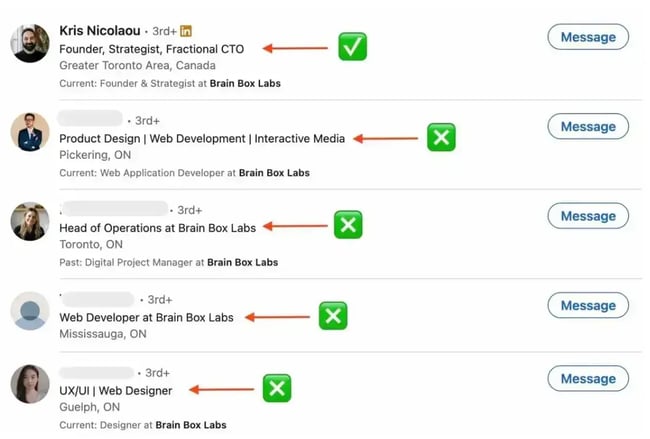
These qualification criteria help narrow the search for leads. For instance, when selling a product useful for software development companies, a rep targeting Brainboxlabs would reach out to Kris Nicolaou, its founder and CTO. As CTO, Kris is likely a power user of the product and the right person to contact.
3. Initiate a conversation.
Once a lead is identified, tools like Hunter and Snov can help find and verify their email address, ensuring outreach lands in the inbox rather than the spam folder.
After verifying the email address, the next step is to write and send a brief cold email with a call-to-action that doesn’t pitch the product directly. The goal is to get the potential client to schedule a call or respond positively.
HubSpot’s email tracking tool notifies reps the moment a prospect opens an email, making it easy to follow up at exactly the right time rather than guessing
4. Explain your product’s benefits.
Having prospects hop on a call or respond to your email is only half the battle. The second half shows how your product impacts your prospect’s business operations.
Don’t make the mistake of selling prospects on features. Show them the benefits of using your product. When you do, they’ll see tangible results of using your product and the issues it fixes.
5. Create a sense of urgency.
Establishing a sense of urgency prevents deals from stalling or falling apart. Urgency gives prospects a reason to move forward rather than delay.
Urgency can be created by offering a time-limited discount, free onboarding, or anything that delivers immediate value from the product. The key is to offer something prospects genuinely need. There is a thin line between creating urgency and applying pressure, and crossing it can cost the deal entirely.
6. Anticipate and prepare to address objections.
Objections can be a good thing. When a prospect raises one, it signals they want to move forward but have a concern that needs addressing. Handling objections well moves a deal closer to the close.
Common objections in sales include:
- We don’t have time.
- We don’t have the money.
- Your product is expensive.
- We don’t need your product at the moment.
- I need to communicate with my partner or another decision-maker.
Preparing responses to these objections is crucial to closing. Reps who anticipate concerns and address them confidently are far better positioned to move deals forward. Sales Hub’s playbooks feature lets reps store objection responses, talk tracks, and qualifying questions in one place, so the right response is always a click away during a live call
Now that these sales closing tips are covered, here are 18 proven closing techniques and what makes each one effective.

18 Sales Closing Techniques to Close the Sale Faster
- Now or Never Closes
- Summary Closes
- Sharp Angle Closes
- Question Closes
- Assumptive Closes
- Take Away Closes
- Soft Closes
- The Alternative Close
- The Something for Nothing Close
- Unique Offer Close
- Opportunity Cost Close
- The Puppy Dog Close
- Objection Close
- The Video Close
- The Columbo Close
- The Ownership Close
- Offering Competitor Close
- The Ben Franklin Close
1. Now or Never Closes
This is where salespeople make an offer that includes a special benefit that prompts immediate purchase. This technique creates a sense of urgency and helps prospects overcome buying inertia. It’s also a proven method for closing a sale over the phone because you have the prospect’s undivided attention in real time.
Example
- “This is the last one at this price.”
- “We’ve got a 20% discount just for customers who sign up today.”
- “If you commit to buy now, I can fast-track you to the front of the implementation queue.”
2. Summary Closes
A summary close works by recapping the value the buyer has already agreed to. Salespeople who use this closing technique reiterate the items the customer is likely to purchase. They stress the value and benefits of their product to encourage prospects to sign a deal.
Example
“So we have the Centrifab washing machine with brushless motor, the 10-year comprehensive guarantee, and our free delivery and installation service. When would be a good time to deliver?”
By summarizing previously agreed-upon points into one tight-knit package, a rep can help prospects visualize what they’d get from a deal.
3. Sharp Angle Closes
Prospects often request price reductions or add-ons when they feel they have the upper hand in a deal. With approval from a sales manager, the sharp angle close technique can catch these prospects by surprise and redirect the conversation toward commitment..
Example
When they ask, “Could you add on a few extra hours of onboarding at a discounted rate?“ reply, ”Sure. But if I do that for you, will you sign the contract today?”
They won‘t likely expect this response — first, because you agreed to their request, and second, because you’ve proposed closing today.
4. Question Closes
To achieve the two goals above, reps must ask prospects probing questions. Effective salespeople focus on closing a sale as soon as a conversation begins. Through a series of questions, they develop desire in the client and eliminate purchase objections.
One can even close the sale with a question, allowing the rep to address outstanding objections while securing a commitment.
Example
“In your opinion, does what I am offering solve your problem?”
This question reveals whether the prospect is sold on the product while keeping the door open for further selling. If the answer is “no,” it remains an opinion rather than a final decision, leaving room to continue the conversation. If the answer is “yes,” the next step is getting the contract signed.
Here’s another question close: “Is there any reason why we can’t proceed with the shipment?”
This question asks either for closure or more information about why the customer isn’t quite convinced. It’s a win-win.
5. Assumptive Closes
An assumptive close works best when a prospect has shown clear interest and asked practical buying questions. This technique draws on the power of positive thinking. Believing a deal will close from the first outreach can have a significant effect on how the rest of the sales process unfolds.
The key is to closely monitor the prospect’s interest, engagement, and objections throughout.
Example
After a call or meeting, ask, “Did this presentation align with your expectations?“ If you’ve just provided them with new information about your product or service, ask, ”Does this sound like something that would be valuable to you? Does this meet a specific need or pain point?“
By keeping your ear to the ground — and assuming good intent from the start — you‘ll bring authority and direction to your sales process that wouldn’t be there otherwise.
6. Take Away Closes
Picture a kid who is given a toy and then has it taken away. The reaction is immediate protest. The same psychological principle applies in sales — when something valuable is removed or made less accessible, prospects tend to want it more
Example
If they’re balking on price, remove a feature or service and present the discounted offer to them. You can say, “Our product will perfectly fit your budget. However, we can only provide Feature 1 or Service 1 at the initial price. Does this work for you?”
Often, the prospect will think more about what was removed rather than the discounted price or their proposed price.
Free Sales Closing Guide
An easy-to-use sales closing guide with three tactics you can use right away.
- Using an ROI calculator for your prospects
- How to ask confirmation questions
- Sales question templates you can use today
- And more!
Download Free
All fields are required.
Form not available
7. Soft Closes
A soft close in sales reduces buyer pressure while testing readiness. It lets reps show the benefit of the product to prospects, followed by a low-impact question that ascertains their openness to learning more.
Example
“If I could reduce widget maintenance by 25% and increase widget productivity by 15%, would you be interested in learning more?”
The benefits were clearly stated without making any demands or sudden requests.
If the example above still seems too direct, you could ask, “If I told you I could reduce widget maintenance by 25% and increase widget productivity by 15%, would that align with your company goals?”
This removes their need to commit to you and gives a rep more time to learn about the prospect’s business needs.
8. The Alternative Close
Salespeople use this technique to present prospects with two or more buying options that can lead to a sale. Prospects may believe this puts them in the driver’s seat and gives them the feeling of control over the deal.
In truth, it doesn’t. That’s because salespeople can suggest options but subtly direct prospects to the more expensive package they want prospects to choose.
Example
If your prospect is pushing back on price and wants certain features, you can say, “Would you get our Pro plan, which includes free onboarding and six months of free support, or our Basic plan, which starts at $30 per month but has fewer features and no free support?”
9. The Something for Nothing Close
The something-for-nothing close involves offering a gesture of goodwill. Salespeople hope prospects repay this gesture by signing a deal. This closing technique is great for companies that lack social proof and want to get customers fast.
It’s also excellent for companies trying to get prospects to switch from a competitor’s product.
Example
Salespeople can say, “Alright. We know you have a lot of data in your [software name], and migrating to ours will cost more than $1,500. If you sign today, we will migrate your data for free. Would you like that?”
10. Unique Offer Close
This closing technique works well for prospects with large deal sizes. When a high-value prospect develops cold feet, creating a special offer exclusive to them can provide the nudge needed to move forward. The prospect gets a unique offer, and the deal gets closed.
Example
“If I ask my manager to offer you a discount, free trial, or free migration, would you be willing to sign a contract?”
11. Opportunity Cost Close
This closing technique works best when a prospect stands to lose something substantial without the solution. Highlighting that potential loss gives the prospect a reason to reconsider stalling the deal.
Example
“I wouldn’t like you to deal with [negative outcome 1] and [negative outcome 2] because you lacked the right [category of your product]. Would you like to forestall such outcomes by taking the next step?”
12. The Puppy Dog Close
The Puppy Dog Close is a more immersive approach to closing. This method foregoes explanation in favor of experience — meaning it centers on prospects testing a product or service firsthand rather than hearing about it from a sales professional.
Delivering on this method rests on a few key factors. A clear picture of how the prospect will demo the offering is essential. Options include free samples, a dedicated free trial, or a more involved but carefully observed test.
A firm, constructive timeframe also matters — one that gives the prospect a meaningful perspective on the product without being too costly. Finally, transparency is non-negotiable. Offering a free trial only to follow up with hidden or surprise fees will undermine trust and likely cost the deal.
Example
“Would you like to try our product for 30 days free? If you like it after the trial, you can purchase any of our plans. Otherwise, you aren’t obligated to buy. What do you think?”
13. Objection Close
The objection closing technique works when it’s unclear why a prospect is stalling. Often, the prospect still has unaddressed objections. Once it’s clear the prospect understands what the product offers, asking directly if they have further objections opens the door to resolving whatever is holding them back.
Example
“Sam, is there any reason that’s holding you back from signing this deal today?”
By asking this question, you can address their objection instantly and get them to sign a deal quickly.
14. The Video Close
Nothing builds trust better than video. When video is used to address objections, explain pricing, or walk through a feature, prospects see a real person and the effort behind the outreach.
When using the video close technique, tracking email open data helps identify when a prospect views the video. Once they do, following up immediately to address any remaining objections in real time keeps the momentum going.
Example
“Hi [first name]. I hope the video answered your question about [issue]. I’d love to answer any other questions immediately.”
15. The Columbo Close
Dubbed from an American TV series, the Columbo Close is based on a famous one-liner — “Just one more thing...
This technique works best when a prospect signals they are not interested. Stopping them in their tracks with the one-liner creates one more opening to re-pitch the solution in a way that addresses what has been holding them back.
Example
“Before you go, just one more thing. We have a customer in your exact space who had the same concern and saw results within 30 days. Can I send that information over?”
16. The Ownership Close
In this closing technique, the salesperson speaks as though the prospect has already bought the product. This is a classic example of future pacing, where the conversation shifts to help the prospect visualize what their situation looks like after the purchase. When a prospect can picture a better future state, the decision to move forward feels less like a risk and more like a natural next step.
This technique works better when the salesperson has results or case studies to back their points.
Example
“When you start using your [product, for example, HubSpot CRM], you’ll save time by not juggling multiple software as you’ll have your all-in-one CRM. How would you spend the hours you save using [product] every month?”
17. Offering Competitor Close
In a last-ditch attempt to close a prospect, you can tell prospects the competitors they can try. Though unconventional, Lindy Drope says this closing technique works. “When a pricing objection comes up, I love to talk openly about my prospects’ alternative options,” says Lindy.
“Most reps fear bringing up other players in their field, especially when their product is the most expensive,” Lindy adds.
Example
“Hey, it sounds like this type of product/service may be out of your range right now. That said, there are some options our current users checked out prior to signing up with us. Below are the cost savings associated with going with these alternatives.”
Prospects tend to appreciate this kind of honesty and spend less time shopping elsewhere. It also signals confidence in the product’s value and genuine care for the prospect’s outcome. If they run into roadblocks with any alternative product suggested, they are likely to come back.
When using this technique, Lindy recommends knowing the prospect’s pain points well and avoiding it early in the sales cycle, where it can come across as dismissive or condescending.
18. The Ben Franklin Close
The Ben Franklin Close is one of the more involved, consultative closing techniques sales professionals can leverage. The strategy involves working with a prospect to create a pros-and-cons list about a given offering.
Its value is multifaceted. It surfaces where a prospect’s priorities are, creates a forum to articulate the value proposition in the context of those priorities, and opens the door to raising benefits the prospect may not have considered.
There are risks to manage as well. The exercise can accidentally highlight cons the prospect had not focused on, or overemphasizing certain pros can make them feel less compelling rather than more.
Example
“I completely understand wanting to think this through. It’s an important decision. Before wrapping up, would it help to map out the benefits and concerns side by side? That way there’s a clear picture to work from rather than leaving with an open question.”
What to Do After Closing a Sale
Once the sale is closed, it’s time to celebrate. Before the high-fives, a few loose ends need attention.
1. Log the deal in your sales software.
Logging the deal in sales software keeps the team on target for forecasting and ensures the pipeline stays up to date. It also gives everyone the information needed to move the customer to the next step.
2. Provide an introduction to the next team.
Closing the deal is likely the first step in the customer’s journey with your business. From here, they may need to speak with customer success or support to get onboarded.
Set up an e-introduction to the next person taking over, ensuring a smooth transition to the next step of the process.
3. Follow up with the customer in a few days.
Checking in with a new customer and asking how they feel about their purchase goes a long way in building trust and loyalty. If issues arise, the rep can quickly step in or connect the customer with the right person on the team.
Common Sales Closing Mistakes to Avoid
Common closing mistakes include asking too early, ignoring objections, sounding pushy, and skipping next steps. Every rep can improve their close rate by avoiding the common missteps.
- Closing too early: Asking for the sale before establishing value gives the prospect nothing to say yes to. Make them understand the benefit of the solution before asking them to commit during the closing call.
- Talking past the close: After a buyer says yes, stop selling. Pitching after the buyer has agreed on a deal risks introducing new objections.
- Using pressure instead of guidance: Pushing a prospect toward a decision they’re not ready for will erode trust. It also increases the odds of churn.
- Skipping objection handling: Unaddressed objections don’t disappear — they stay dormant and come up when you request the close. Anticipate and address concerns early instead of hoping they won’t come up.
Frequently Asked Questions About Sales Closing
What’s the simplest way to close a sale?
The simplest way to close a sale is to ask a direct, low-pressure question that confirms the prospect is ready to move forward, such as a summary close or a question close. Both work because they don’t demand a decision out of nowhere, but recap the value you’ve already established and invite the prospect to say yes.
What should you say when closing a sale?
What you say should tie directly back to the prospect’s stated needs. A line like “Does this solve the problem you came to us with?” or a recap of the specific benefits you’ve discussed works well because it keeps the focus on their decision.
What are the top 5 closing techniques?
Five of the most reliable techniques are the summary close, the question close, the assumptive close, the soft close, and the objection close. Each works differently. Some create clarity, others build momentum or surface hidden concerns, so the best choice depends on where the prospect is in their decision.
What is the 3-3-3 rule in sales?
There’s no single agreed-upon definition of the 3-3-3 rule — different sales teams use the term for different frameworks. The most common version treats it as a follow-up cadence, such as three touchpoints across three channels over three weeks, meant to keep deals moving without overwhelming the prospect.
Close more deals with confidence.
Closing is the natural result of listening well, understanding what prospects need, and helping them make a decision they feel good about. The techniques in this guide give reps a framework to work from, but empathy is what brings them to life. When a prospect feels understood rather than handled, yes tends to follow.
HubSpot Sales Hub gives reps everything they need to close, from email tracking and meeting scheduling to deal pipelines and playbooks, all in one place. Master the techniques, lead with empathy, and let the tools handle the rest.
Editor’s note: This post was originally published in October 2019 and has been updated for comprehensiveness.
Free Sales Closing Guide
An easy-to-use sales closing guide with three tactics you can use right away.
- Using an ROI calculator for your prospects
- How to ask confirmation questions
- Sales question templates you can use today
- And more!
Download Free
All fields are required.
Form not available
Sales Closing


![Sales close plan: The best tool to close way more deals [+ template]](https://53.fs1.hubspotusercontent-na1.net/hubfs/53/close-plan-1-20260611-906576.webp)


![Sales Pros Say This Tool is Key to Driving Sales: How to Close More Deals With It [Data]](https://53.fs1.hubspotusercontent-na1.net/hubfs/53/85_Best-Sales-Strategies.png)