


Scaling customer success is a proactive, systematized approach to helping CSMs sustainably meet the demands of a growing customer base. Scaled customer success programs leverage tactics and tools such as repeatable workflows and automation to multiply what existing CSMs can handle.
Click Here to Get HubSpot's Customer Service Software
This guide covers how scaled customer success works, why it’s important for growing companies, how to build scaled customer success operations, and the tools and team structures to implement them.
What is scaled customer success?
Scaled customer success is an efficiency model that helps CS teams maintain customer satisfaction for a growing customer base through automated processes, specialized tools, and playbooks.
Goal and Scope
The goal of scaling enterprise customer success is to separate customer success outcomes from internal headcount. At the enterprise level, customer success teams can’t offer the same one-on-one service that SMBs can. There are simply too many customers, and hiring enough CSMs to provide white-glove service to each one would be financially unsustainable.
Scaled customer success creates more bandwidth for CSMs to support high-value, complex customers and large account volumes without losing the human touch. Teams that scale customer success well can serve more customers while reducing manual work, freeing success teams to focus on the overall customer experience and high-value customer interactions.
Delivery Model
Effective scaled customer success programs involve lower-touch automated workflows, onboarding programs, and self-service resources. The right mix depends on account value and complexity, and customer base size. Lower-touch customer segments can rely on self-service resources and automated workflows, while complex, high-value accounts can lean more on human guidance from dedicated CSMs.
For example, onboarding programs based on automated workflows can demonstrate immediate value to customers through self-service resources and in-product guidance. The idea is to identify routine questions and common roadblocks, and surface solutions so customers don’t need to contact service or support teams.
Customer success management tools can also identify customer health signals, track usage, and prioritize outreach to higher-touch cases that need strategic guidance. When connected to a CRM like HubSpot, Success Teams have a unified view of all customer touchpoints and data, enabling personalized service without switching systems or losing context.
Pro tip: To gauge how deeply to invest in automation versus white-glove service, create a map of customer value and complexity before designing a scaled customer success delivery model.
.webp?)
Free Help Desk & Ticketing Software
Keep track of customer requests in one unified help desk that connects to your CRM database.
- Provide personalized, AI-powered support to your customers
- Save time, reduce errors, and streamline service processes
- Improve rep efficiency & time to resolution
- And more!
Benefits of Scaling Customer Success
Scaled customer success can improve financial outcomes for growing businesses while also improving customer experiences. Benefits include increased customer lifetime value, richer customer data for personalization, and a clearer view of the customer journey.
Higher Customer Lifetime Value
Scaling customer success programs increases customer lifetime value (CLV) by helping more customers realize a product’s worth. When customers are supported and guided toward success at scale, they are more likely to renew and expand, boosting CLV and the bottom line.
Scaled customer success allows CS teams to support more customers with lower touch by leveraging customer success tools and automated workflows. Doing so frees up CSMs to focus their efforts on retaining and expanding larger, more strategic customer accounts, which often have an outsized impact on CLV.
One CEO frames it this way: it’s less about extending company reach and more about increasing the value you provide to existing customers.
“We focus on deepening our impact and ensuring each individual is getting a more enriched experience through our offerings,” says James Wilkinson, CEO of Balance One Supplements. “It’s paying off in spades. We’ve experienced a 40% increase in our CLV due solely to our large investment in scaling and optimizing our customer success, which has reflected a huge increase in revenue from our customers over the recent years.”
Wilkinson attributes this significant increase in customer growth to high customer satisfaction.
Richer Customer Data
More is always better when it comes to data. By scaling analytics, CSMs can continually refine their playbooks as the data reveals how customers adopt a product, which features they use (or don’t), where they get stuck, and other insights that predict churn.
CEO James Wilkinson shares, “We’re putting great efforts into providing a more personalized experience by collecting data and then using data analytics to improve our recommendations and support framework for our customers so that they consistently return to our brand and make more purchases.”
Pro tip: HubSpot Service Analytics comes with out-of-the-box reports that help CS teams track customer satisfaction, ticket performance, and rep productivity without building every report from scratch.
Proactivity
Proactive engagement is one of the biggest benefits of scaled customer service. In traditional reactive support, teams wait for customers to raise issues, which is a recipe for churn. Scaled CS models enable teams to get ahead of problems by delivering proactive engagement through automated tools and workflows. For example, CS teams can track customer health signals and automate notifications to CSMs or outreach to at-risk customers before things really start going downhill.
Pro tip: AI is transforming customer success at scale. Tools like HubSpot’s customer agent support CS at scale with automated resolutions and provide proactive insights into customer health to prioritize outreach.
A Clearer View of the Customer Journey
With clearly defined customer stages and consistent data from customer success management software, CS teams get a high-level view of where customers are stalling and which specific features unlock the most value, all broken down by segment or account size.
By mapping the customer journey with a scaled customer success strategy, businesses can:
- Understand customer expectations.
- Anticipate success hurdles.
- Proactively resolve problems.
- Improve customer experience.
- Reduce the burden on customer support teams.
- Tailor services to different segments and personas for larger accounts with multiple stakeholders.
How to Scale Customer Success
Even the best-laid plans require smart execution. Here’s how to implement a scaled customer success program that helps teams support more customers, improve consistency, and reduce reliance on 1:1 manual work.
Create a clear onboarding process.
A seamless onboarding process is the foundation of scaled customer success, enabling customers to reach first value without support intervention. It’s also one of the most automation-friendly stages of the customer journey.
“This must be the most diligent part of your customer success process,” shares Ed Porter, owner and chief revenue officer of Blue Chip CRO. He recommends that businesses spend more time, money, and resources on building the best customer onboarding experience.
“Often, CSMs only talk to execs, who are farthest removed from the usage of the product or service. During onboarding, the full personas need to be mapped, engaged, and have a role to play that interfaces with your company,” says Porter.
I built Advance, a tour management app for independent artists and bands. When I launched, plenty of people signed up, but few activated, and for Advance, activation means creating a first show. So I built an onboarding flow that walks new users to that first show on their own, no outreach from me required. The first time someone logs in, the app skips the empty dashboard and prompts them to import their upcoming tour dates from a URL.

I also set up a series of automated onboarding emails with help articles that walk users through the key features. Activation climbed 10% after I launched the flow. The bigger lesson was scale. The onboarding flow runs on its own, so even at 100,000 users, it would onboard everyone the same way.
Offer customer self-service.
Self-service resources also keep the customer experience consistent. A knowledge base with help articles, FAQs, or video tutorials gives customers a single source of truth for product information.
Customers prefer self-service, too. According to HubSpot’s 2024 State of Service report, 78% of service leaders say customers prefer to solve issues on their own.
As a former customer support rep at HubSpot, I leaned on our self-service resources daily, both to troubleshoot and to share solutions with customers. Self-service resources allowed me to serve customers faster, and customers were less likely to receive different answers to the same question from different reps.
Invest in customer support.
To maintain a high-quality customer experience, scaling customer success helps deliver responsive, consistent customer support across all channels without ballooning headcount. Service Hub helps teams manage increased volume with a shared omnichannel inbox, AI customer agents, intelligent routing, and custom views. Per-rep efficiency gains from these tools compound across an organization, allowing teams to serve more customers without a linear hiring curve.
As a former support rep, I can attest that the right tools can be the difference between closing 10 and 15 cases a day. I worked support before AI existed, and what’s available now would have changed my day: features inside the help desk that surface insights with full customer context, automatically draft replies with awareness of internal documentation, and even build self-service articles from resolved tickets. Tools like HubSpot are a force multiplier, and I’d have closed more cases with them.
A well-equipped support team plays defense for busy CSMs, allowing them to focus on key accounts even as new customers arrive. Strong support takes more than tools, though. The best-performing teams build a culture of customer obsession.
Dr. Thanu Jey, medical director and founder of MediBrace, encourages businesses to leverage technology while keeping the human touch in their customer support. “Remember, technology empowers, but human connection is irreplaceable. Invest in building strong relationships through personalized interactions and active listening,” says Jey.
Jey also recommends empowering teams to go the extra mile to resolve issues and exceed expectations: “By prioritizing customer success, you build a community of loyal advocates who drive sustainable growth,” Jey says.
Survey for customer satisfaction.
Customer satisfaction surveys such as NPS and CSAT provide critical insights CS teams need to scale. And tools like HubSpot’s Customer Feedback Software collect input across the customer journey to identify pain points, so scaling CS teams can design flexible automations and workflows with little manual effort or a drop in experience.
Download our free customer survey templates to get started.
Share customer success.
Customer success stories can convert hesitant prospects. Aksinia Chumachenko, product analytics team lead at Simpals, has used this approach: “When people see that someone has solved their problem with a product or service, it increases their trust, and they are more inclined to use this product themselves because they have seen a positive example.”
Free Help Desk & Ticketing Software
Keep track of customer requests in one unified help desk that connects to your CRM database.
- Provide personalized, AI-powered support to your customers
- Save time, reduce errors, and streamline service processes
- Improve rep efficiency & time to resolution
- And more!
How to Scale Customer Success for Enterprise Accounts
According to a 2025 SaaS Benchmark report from Highalpha, companies with over $50 million in ARR generate over 60% of new ARR from existing customers, underscoring the importance of serving and expanding existing accounts. The best practices below adapt the scaled model for enterprise demands.
Build multi-stakeholder onboarding.
Enterprise stakeholders measure success on different terms; end users want to make their jobs easier, while decision-makers want evidence the investment will pay off.
With scaled onboarding, CSMs can map the personas associated with company stakeholders and create tailored onboarding flows and strategic milestones for each. Service Hub helps CSMs create separate workflows by persona. Because Service Hub connects to HubSpot Smart CRM, CSMs get full visibility into user activity, can direct personalized outreach to stakeholders, and set automations that nudge the rest with helpful content at pivotal moments.
Use strategic account plans and executive business reviews.
A strategic account plan is a personalized long-term playbook that defines enterprise customer goals, success metrics, key stakeholders, and their path to success.
An executive business review, or EBR, is a recurring (often quarterly) strategic review within SAPs that focuses on ROI, strategic alignment, adoption progress, and next-step planning.
Together, SAPs and EBRs help companies optimize revenue growth as they scale through coordinated operational execution and continuous refinement of resources and strategy.
Build customer health scores and renewal forecasts.
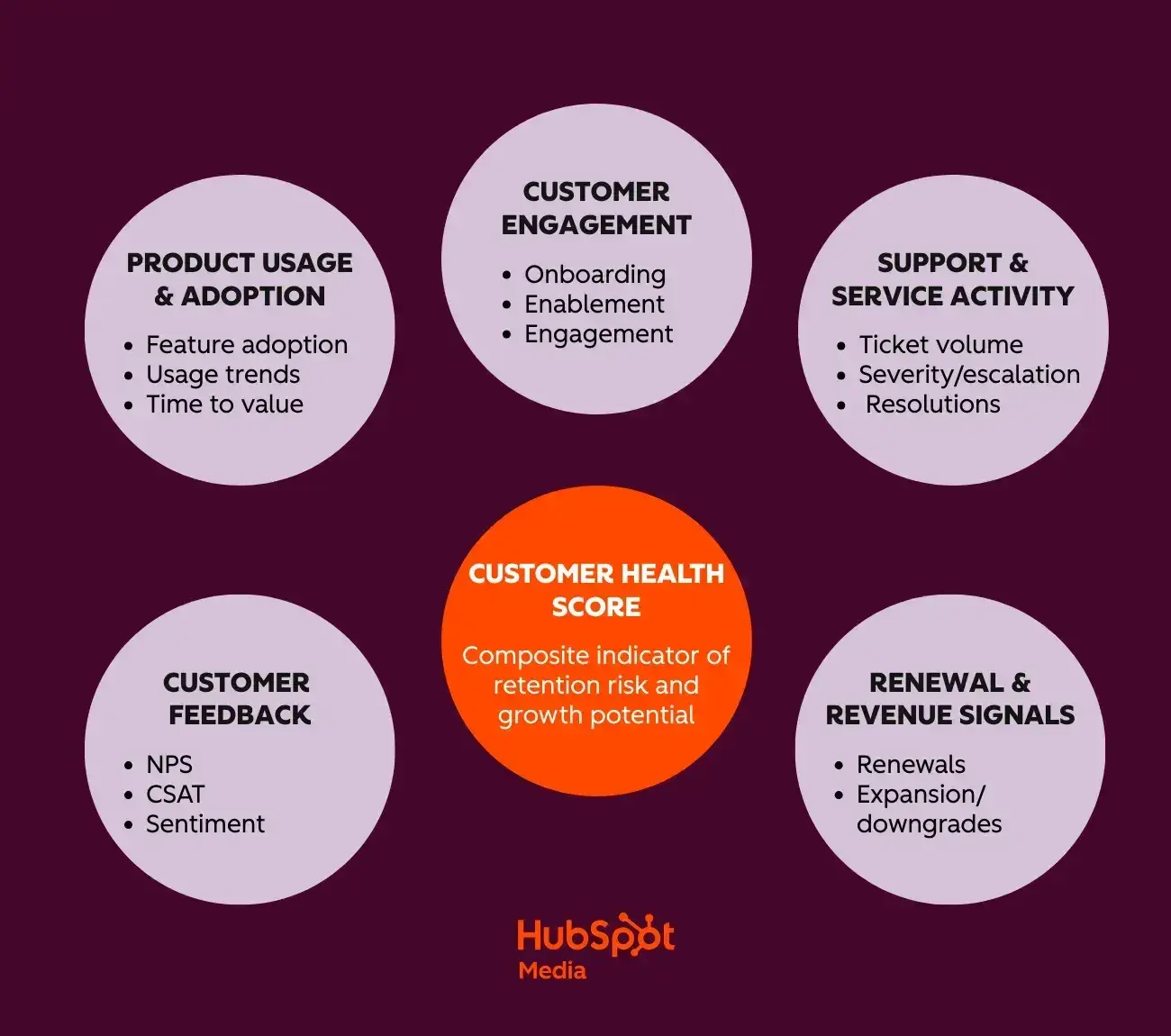
Customer health scoring helps CSMs identify which strategic accounts are healthy and ready for renewal and expansion, and which are at risk of churn. At the enterprise level, customer health scores report on product adoption, support signals, customer sentiment, and commercial risk.
Design a tiered engagement model.
In tiered structures, TCSMs triage accounts by size and complexity. Segmenting by ARR (annual recurring revenue) is a common method, since large, complex enterprise accounts typically account for the most ARR.
A three-tier model works well for most enterprise customer success teams. The most complex, highest-ARR segment is assigned a dedicated CSM for each account who works closely with the customer on SAPs and EBRs.
Mid-tier clients may share a CSM and have periodic check-ins. Simultaneously, the lowest-touch accounts receive automated service through in-app guidance, self-service resources, lifecycle emails, and other automated workflows designed to nudge them toward success.
Service Hub and Smart CRM let CSMs create these tiers as custom properties on contact and company records, making it easy to enroll accounts in automated workflows and build detailed reports broken down by customer segment.
CSM vs. Enterprise CSM: When to Specialize
Enterprise CSMs manage a small portfolio of high-value accounts. Regular CSMs manage a larger customer pool and focus on building workflows that optimize activation, adoption, and retention across hundreds of accounts, minimizing the need for bespoke services to individual customers.
Knowing when to add an enterprise-specific CSM role depends on a few factors. If a company has mostly low-ARR accounts with limited needs, a traditional, scaled customer success operation can serve them well. But if the majority of a company’s ARR comes from a handful of high-value accounts, it’s worth investing in an enterprise CSM team to guide those accounts toward success and protect and expand that revenue.
SMB CSM vs. Enterprise CSM at a Glance
7 Tips for Scaling Customer Success
One in six shoppers say they’ll walk away from a purchase over bad service. These tactics can build scaled programs that support high-volume SMBs and complex or enterprise scenarios.
1. Build a customer success team.
Scaled customer success teams rely heavily on automated systems and workflows, such as those in Service Hub, that can proactively serve large customer numbers with minimal direct involvement from CSMs.
Building a customer success team starts with assessing the customer base. Companies with a large base of low-ARR accounts needing minimal touch can scale with a leaner team and automated CS workflows. Companies that derive the majority of their revenue from a handful of high-value strategic accounts might keep a small team of high-touch CSMs armed with automated tools to help them keep pace.
When managed properly, customer success teams are incredibly effective, with the HubSpot customer success team improving revenue retention from 80% to 100% by refining how we work.
Free Help Desk & Ticketing Software
Keep track of customer requests in one unified help desk that connects to your CRM database.
- Provide personalized, AI-powered support to your customers
- Save time, reduce errors, and streamline service processes
- Improve rep efficiency & time to resolution
- And more!
2. Automate repetitive work.
Automating rote tasks like drafting replies and scouring customer data frees CSMs up for more lucrative pursuits.
Tools like Service Hub let scaled customer success teams automate reaching thousands of customers at once. CS teams can set up an automated onboarding workflow that sends customers how-to guides, videos, and help content at key points of the customer journey and around product activation milestones. They can also set up customer health scoring and triggers that ping a CSM or even automatically reach out to a customer when health dips.
Shubham Nigam, a former senior software engineer on LinkedIn Search, watched millions of daily users generate thousands of pieces of feedback with AI. “Using AI, we were able to categorize pieces of feedback and find the best ones to work on. The only way to scale customer success is to use AI,” says Nigam. “Convert the unstructured customer feedback data into structured data through LLMs and then give feedback to product teams to fix it.”
Explore free automation tools in our Service Hub.
3. Use customer feedback.
Customer feedback helps CS teams prioritize outreach and prepare strategies based on actual customer experiences. HubSpot’s Customer Feedback Software supports scaling through NPS, CSAT, and CES surveys, built-in dashboards, and CRM-connected responses that let teams segment scores by account tier or lifecycle stage.
4. Build scalable systems.
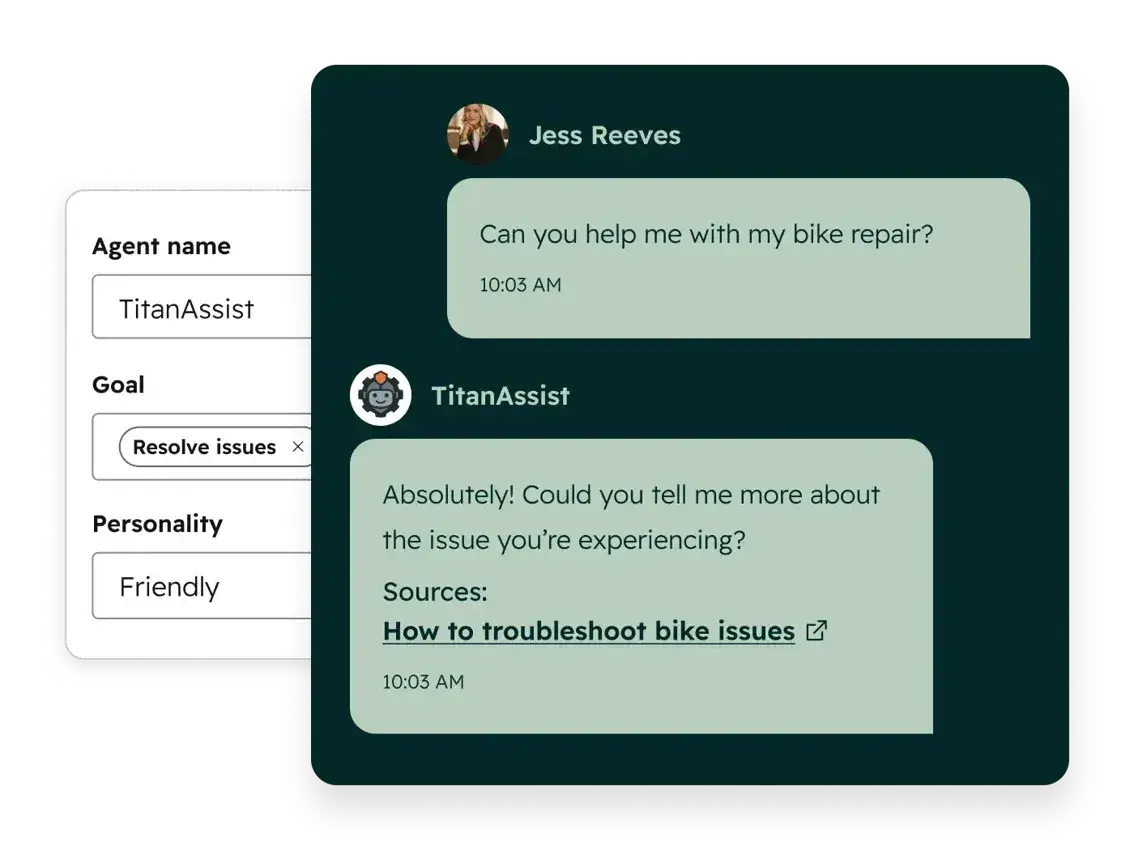
Repeatable, automated processes that help CSMs support multiple customers simultaneously. Examples include automated email onboarding workflows, ticketing systems with intelligent routing and assignment, and AI chatbots that automatically resolve routine customer requests. All of these features and more are included in Service Hub, a system designed specifically for scaling support and success teams.
Example of an AI chatbot within Service Hub:
5. Involve engineers.
Engineers understand the inner workings of a product in ways that sales and success teams can’t. Complex enterprise accounts with technical stakeholders may warrant a direct line to engineering.
Shubham Nigam, now co-founder of Questera.ai, shares insights into the importance of engineers’ involvement in customer conversations: “Being an engineer for 10+ years, I strongly believe that it should be an engineer directly talking to the customer and solving their issues with great speed, removing the need for the customer talking to the middlemen.”
Pro tip: Use Service Hub to set up automated escalation paths that connect customers directly to engineering teams for complex technical inquiries.
6. Use Service Hub.
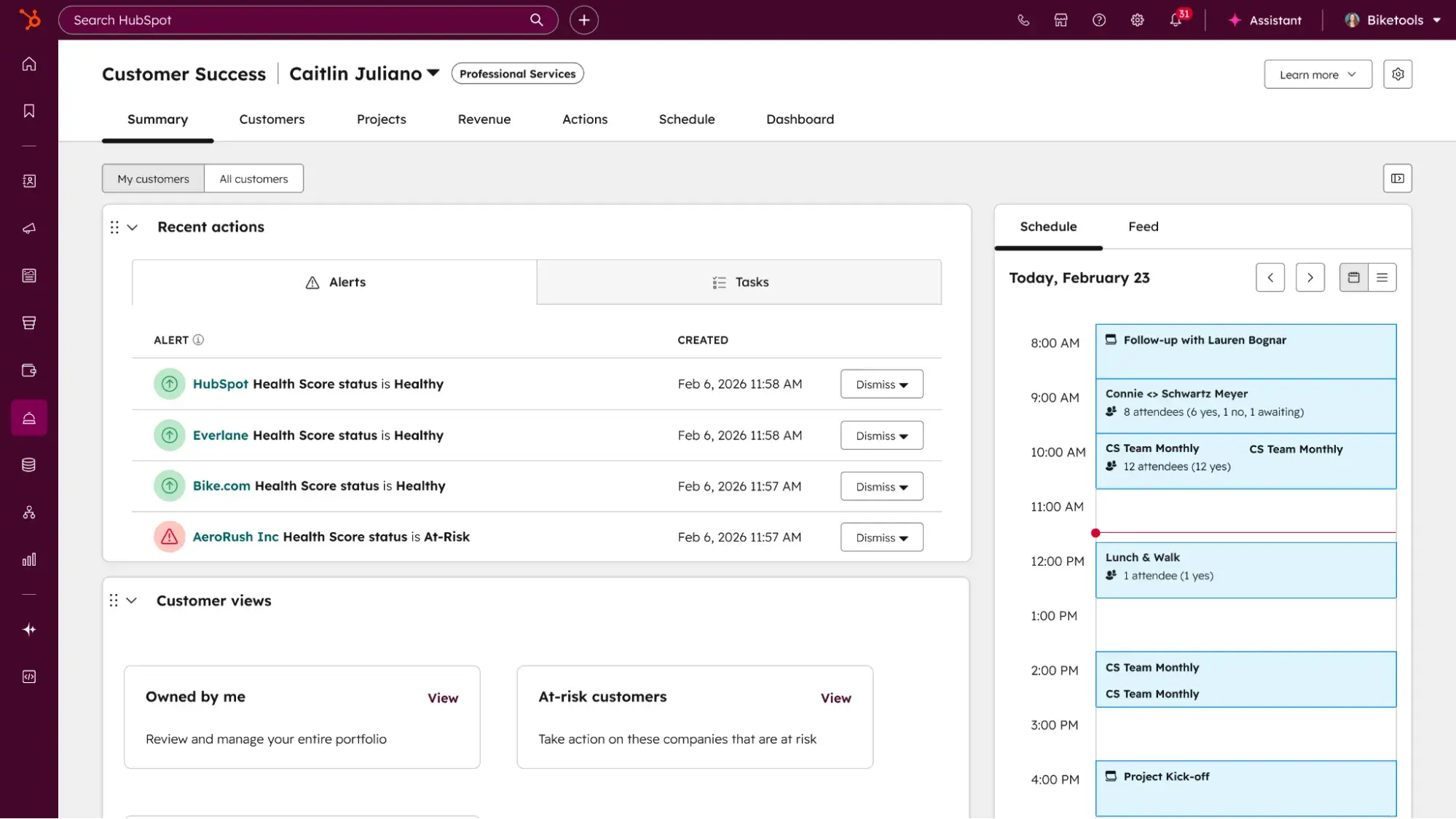
Service Hub is built to support scaling customer success and support teams. Because Service Hub integrates natively with Smart CRM, customer context carries across sales, support, and success teams, eliminating communication silos.
HubSpot gives CSMs a 360-degree view of the customer journey by combining product usage, support history, and CRM data into one place. Features include:
- Contact management.
- Conversation tracking.
- Built-in and custom reports.
- Automated follow-ups.
- Customer portals.
- Customer surveys.
- Knowledge base and self-service resources.
- And much more.
Smaller teams can start with HubSpot’s free edition, while enterprise teams can run the full Customer Success Workspace.
7. Consider investing in customer service outsourcing.
Businesses that outsource customer service can scale service up or down to match demand. During seasonal peaks like Black Friday or Cyber Monday, some ecommerce businesses benefit from bringing on outside help to handle the expected surge.
Pro tip: Outsourcing isn’t right for every business. For SaaS and other relationship-based customer success orgs, avoid outsourcing these roles. They depend on a deep understanding of customer needs and pain points that build over time. Instead, tools like Service Hub power success teams to serve larger customer bases with comparatively fewer CSMs.
Scaling Customer Success FAQs
What is scaled customer success?
Scaled customer success is a proactive approach to serving a growing number of customers without hiring at the same rate. It relies on self-service and automated workflows to serve lower-touch segments, freeing CSMs to focus on high-value, complex accounts with white-glove service.
What is enterprise customer success?
Enterprise customer success is the practice of driving adoption, value realization, renewal, and expansion in large, complex accounts. Enterprise accounts involve more stakeholders, complexity, and higher revenue risk. Enterprise customer success teams have dedicated CSMs per account who use strategic account plans, executive business reviews, and a hands-on, collaborative approach.
What’s the difference between a CSM and an Enterprise CSM?
A CSM manages a large pool of customer accounts through repeatable, low-touch programs like automated outreach and self-service resources. Enterprise CSMs manage a smaller number of high-value, complex enterprise accounts by acting as a bespoke strategic advisor. Enterprise CSMs coordinate across multiple stakeholders and focus on revenue retention and expansion. Standard CSMs focus more on developing processes and automation to encourage activation, adoption, and retention at scale.
Scaling Your Success
Scaling customer success helps enterprise CS teams of all sizes serve a growing customer base more seamlessly through intelligent systems, playbooks, and automation. Done well, it improves retention, expansion, and advocacy by consistently meeting customer needs with minimal additional resources.
Service Hub is a flexible solution for organizations of all sizes. Lean teams can leverage repeatable, automated processes, such as onboarding and self-service tools that reduce support volume. Mid-to-large CS teams can scale efficiently with centralized control, from contact management to automated workflows that support lower-touch customer segments, while robust reporting and customer health scoring tools enable CSMs to deliver critical insights and strategic value at the enterprise level.
Editor's note: This post was originally published in March 2024 and has been updated for comprehensiveness.
Free Help Desk & Ticketing Software
Keep track of customer requests in one unified help desk that connects to your CRM database.
- Provide personalized, AI-powered support to your customers
- Save time, reduce errors, and streamline service processes
- Improve rep efficiency & time to resolution
- And more!