.png?width=112&height=112&name=Image%20Hackathon%20%E2%80%93%20Horizontal%20(67).png)

Sure, curated content is a collection of other people's content and resources from around the web. But that doesn't mean it can't be valuable. Just think about a collection of mint-condition vintage toys. Each toy that comprises the collection is valuable in and of itself — but a collection of many is even more valuable.
We're going to walk you through how to compile a valuable curated blog post in this post. So, keep reading or jump to the section you’re looking for.
- What is curated content?
- How to Create a Curated Blog
- Content Curation Tips
- Curated Content Examples

What is curated content?
Curated content is topical inspiration that comes from other brands, blogs, research, or social media posts. It's content that businesses collect, categorize, and share on their own channels while giving credit to the original creator.
Curating is a process that's best known in the art world. Curators choose, organize, and exhibit the work of different artists in galleries and museums. These exhibits usually come together under a common theme or idea.
Curated content follows a similar process. Content curators collect content that aligns with a specific topic, area of interest, or theme. They can use these groups of content to:
- Add context to new ideas
- Make comments on trends
- Highlight the best new content in their niche or industry
Why is content curation useful?
Managing a content calendar is tough. According to HubSpot research, keeping up with the latest trends is a major struggle. For example, 22% of marketers worry about creating engaging content for social media.
Curating content is a proven tactic for generating new and relevant content. It’s a super time and budget saver, but that's not all. Content curation can help brands develop thought leadership and add diverse perspectives. It can introduce your audience and team to new ideas and help you fill your editorial calendar with useful and exciting content.
But content curation is more than resharing or copying whatever there is to find online. If all you're doing is quickly throwing together a few pieces of subpar content, then yes, content curation can be lazy. But take the time to curate a lot of valuable pieces of content, and you'll end up with a collection that's valuable to both the content consumer and yourself.
Because not only does curation save you the step of creating content from scratch, but it also gives the viewer all that awesome content in one place. Great content curation should complement the original content that comes from your brand. It's a way to highlight your brand's role in wider industry conversations. And here's another thing: Curated content also has a lot of potential to rank well in search. Talk about a win-win-win.
Curating content can add powerful value for your audience. But how can you curate content for your blog? Let's review the process step-by-step.
How to Create a Curated Blog
Before you start reading, download the free blog post templates so you can follow along and easily create curated posts for your own blog. And don't forget to check out our additional tips for creating curated blog content at the bottom of this post.
For this post, we’re going to use the "Newsjacking" blog post template. Got your template? Great! Let's get started.
Plan Your Curated Blog Post
First, take several minutes to plan what you want to write about so that you can stay on topic and keep your readers engaged.
1. Identify Your Audience
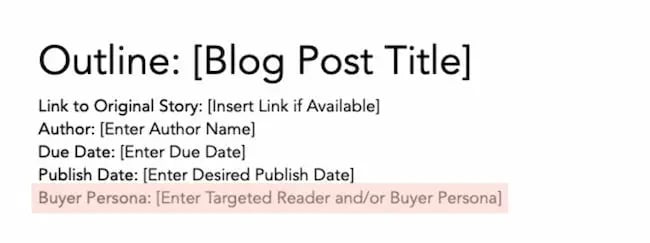
Which buyer persona are you writing this blog post for? Complete this field in your template.
2. Identify Your Key Takeaway
What do you want your audience to learn after reading your curated blog post? How do you want to offer unique value with your curated content? You can write quick notes for this section.
3. Identify Which Types of Content You Want to Curate
What content matters to your audience that you don’t have the time or resources to create? Take a look at these ideas for high-performing blog posts. Then jot down the content types or resources you can curate to support your post ideas. Are they videos? Slideshows? Charts and graphs? Links to articles or ebooks?
4. Brainstorm a Few Possible Titles
You don’t have to pick the perfect title before you finish your blog post, but it helps to jot down a few ideas to help keep you focused during the writing process.
At HubSpot, we call this a working title — a title that you can "work" off of that guides your post. This technique can also help you resist the urge to ramble off in a million different directions. Once the post is complete, we usually fine-tune it to ensure the title accurately reflects the post content, grabs potential readers’ attention, and is optimized for search.
Use the space in your template to craft a few possible blog post titles, and then choose one as your working title. Don’t worry about finalizing your title until you’re finished writing and curating.
Featured resources:
5. Create an Outline
The typical curated content post consists of:
- An introduction: sets the stage for what you plan to address through your collection of curated content
- A body: expands on every bullet, list item, step, and example in a logical order
- A conclusion: wraps up your post with a brief statement that's reflective of what your readers just learned
What are all the bullet points you need to cover to introduce your compilation, explain each point, and remind the reader what they just learned? Use these questions to help you create an outline in your template.
Create Your Curated Blog Post
6. Write Your Blog Post
Write the Introduction
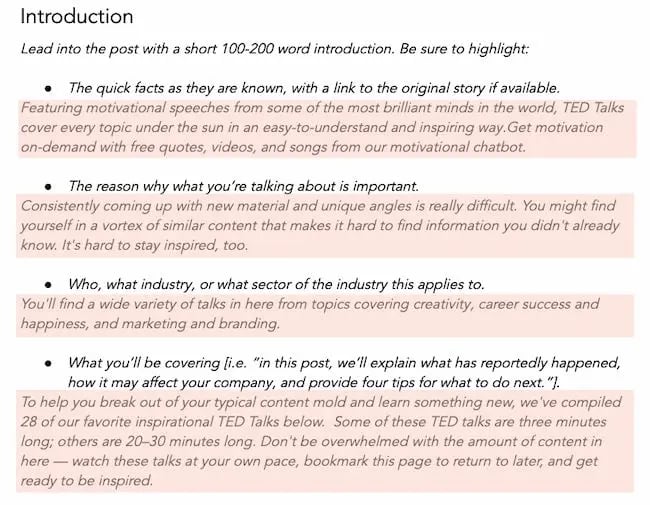
When writing your introduction, you want to keep one question top of mind: How can I establish credibility and get my audience to care about the resources I plan to share with them?
Feel free to leave the introduction for last, too. Sometimes it’s easier to introduce your post after you’ve written the real meat of it. When you do write your intro, here’s how we recommend going about it, using this post about motivational Ted talks as an example:
Note: The template content we’ve provided here is not intended to be copied and pasted into every blog post you write. That results in duplicate content for which you'll be seriously punished in the SERPs.
These templates simply help you start putting pen to paper — or cursor to screen — and help you think through the structure and process of a curated blog post to make the whole writing experience far less painful. We encourage you to incorporate your own original copy.
Write the Body
Remember: The body should follow through with what you promised in the introduction. Your body can be written in paragraphs, with bullets, numbered lists, multiple headings, or a mix of any of these. Feel free to make use of whichever format is easiest for you given the types of content you're curating.
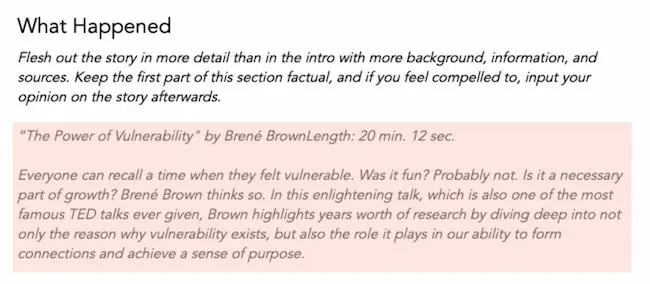
Just be cognizant of these questions: How many examples do I need to include to make this post valuable to readers? How in-depth do I need to go into each example to make them easier to understand? Can I add any visuals that will make my post easier for my readers to understand and consume?
Write the Conclusion
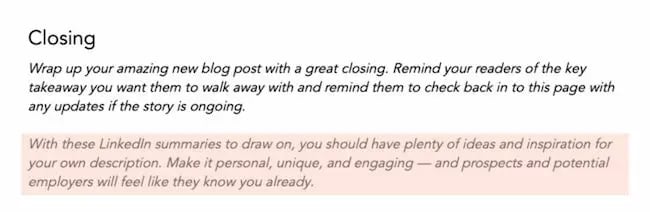
Your conclusion is where you’ll paraphrase the key takeaway you outlined earlier in the planning stages and/or prompt your reader with a question. Check out this example from a blog post about LinkedIn bio examples:
7. Link to Additional Resources Within Your Post
Sometimes it’s hard to say everything you want to say about a single topic in one post. This is why it’s helpful to your readers to find extra resources you can link to for more detail or credibility.
Linking to other blog posts or pages on your site can result in increased visibility in search engines, page views, and time on site. Besides the links to the third-party content you're curating, think about what other resources you can reference to strengthen the points made in your post, and then place those links in your post.
When you insert your blog post copy into your blogging platform, create hyperlinks for these resources where they fit best.
8. Finalize Your Title
Revisit your working title and see if you can make it more accurate, specific, sexy, concise, and SEO-optimized.
Need help? Check out this post on writing perfect page titles. Then, put your finalized title in the field on your template.
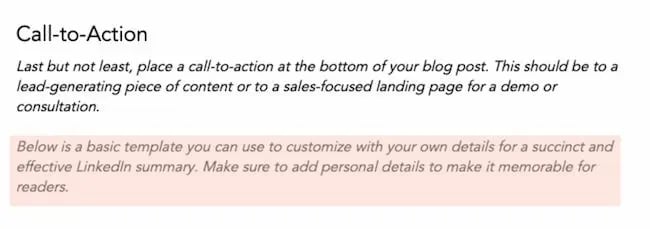
9. Choose a Call-to-Action (CTA)
At the end of your post, what action do you want your readers to take? Do you want them to sign up for your newsletter? Request more information? Tweet something? Download something? Buy something? Ideally, the action is relevant to the content they just read. For help choosing the perfect CTA for every blog post, check out this list of CTA examples. Once you've figured out what you want people to do after they read your post, you should add that to your template.
10. Editing is Important
Everyone can use a second set of eyes to look over their post before putting it out into the world, so have a friend or colleague look it over. Another thing that will help? This ultimate editing checklist.
Prep Your Blog Post for Publishing
11. Add Your Blog Post to Your Blogging Platform
Now that you’ve gone through the exercise of outlining and writing your blog post, you'll want to prepare it for publishing.
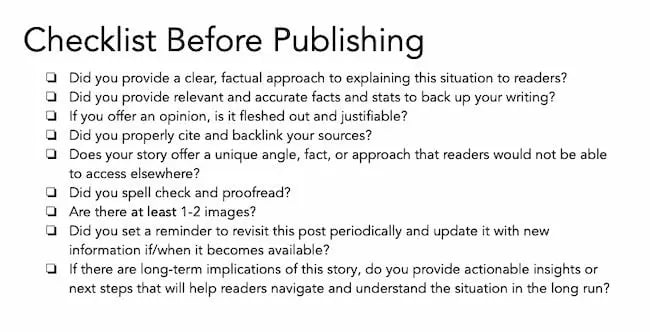
A simple way to do this is to select and copy your finalized title and all your blog post body copy and paste it into a text editor like Microsoft Notepad or TextEdit on a Mac. Pasting into one of these programs strips your copy of all formatting.
This way, when you copy and paste it from the text editor into your blogging platform of choice, the formatting you apply within your blogging platform should render correctly. That being said, after pasting this into your platform, you should triple-check that your formatting carried over.
Now’s the time to make your blog post more scannable by using:
- Headers
- Bold text for key points
- Hyperlinks
- Images
- Embedded content like videos and slideshows
Also, if your CTA is a button, don't forget to add that to your post, too.
12. Add an Image
Every blog post should have an image. At HubSpot, we include at least one photo or image in every post we publish so that A) The content is more visual, and B) When the blog post is shared through social media channels, it’s accompanied by a thumbnail image to entice a clickthrough.
Take a look at our free bundles of downloadable stock photos (general and holiday) to see if any of these royalty-free images will do the trick for you. If you want help deciding which photo to use, check out this quick post about choosing the perfect image for your next blog post. You may also want to check out this article on image SEO.
13. Optimize Your Post for Search
If you’ve spent all this time collecting and annotating your curated content, you’ll want to make sure your post is easily discoverable in search engines. Check out our post about blog SEO for tips on how to do just that.
14. Publish Your Curated Blog
Publish your post, and start tracking its performance.
Content Curation Tips
- Keep it high-quality and relevant.
- Pull from a consistent set of sources.
- Use an automated queuing and distribution system.
- Always give credit back to the original creator.
- Post on multiple channels.
- Figure out a schedule for your curated content.
- Make instant curation one-click easy from your browser.
- Use team tools to increase contributions.
- Spread out posts from the same consistently-good sources.
- Prioritize content from partners and prospects.
- Add value.
Content curation objectives should focus on keeping your audience engaged with value-added content. It can help drive increased, pass-along awareness for other brands. These tips will help you make the most of your curated content.
With that in mind, here’s what we recommend for more effective content curation.
1. Keep it high-quality and relevant.
No matter what type of content you're curating, quality and relevance should always apply. No one wants to access a list of 10 mediocre industry blogs. They want the best. So, the individual content elements you curate should represent the utmost level of quality. You should also explain what criteria you're using to judge that quality.
Remember: Quality is what separates valuable content curation from mediocre content curation.
Stay reasonably focused on a small handful of themes, but make sure your curated content also reflects the human element.
It's also important to make sure the content you're curating is relevant to your audience. That aggregated list of funny viral videos may be funny, but if you're not in the business of humor or marketing, it might not belong on your blog.
2. Pull from a consistent set of sources.
You can find good content just about anywhere. But it can streamline your process if you keep a core set of sources you can count on for consistently good content. You may also want to curate your sources of similarly-themed content.
Before you begin curating, be sure to bookmark a handful of great marketing examples. Topical aggregation sites and newsletters are also great for this. These sources often pull from a wider variety of sources than you may find on your own.
3. Use an automated queuing and distribution system.
This technology helps offer a one-click, easy-to-curate process so you can queue content from your browser.
Many of these tools are customizable. So, you can decide what you want to automate and how to make the most of your content workflow. Any tool that makes it easy to pick content to curate, quickly choose which channels to publish it through, and then automatically space it out over days and weeks is preferable. It's also helpful to have tools that can help you track how your content is performing.
Featured resources:
4. Always give credit back to the original creator.
Since curation involves borrowing content from another creator, you absolutely must attribute and link to the original source. Here's a guide to proper attribution in blog content.
This act of professional respect could also drive more reciprocation and curation of your own content as a result.
5. Post on multiple channels.
Post across channels to increase reach and awareness growth. Multi-channel marketing and cross-posting are essential to content success. This approach can help you save time and make the most of your resources.
That said, don’t go overboard on this (as in, don’t post to 50 LinkedIn groups three times a day). But don’t be afraid to curate good content across social media, blogs, and newsletters at the same time.
6. Figure out a schedule for your curated content.
Content marketing sometimes feels like driving by a house at 35 miles an hour and trying to throw a newspaper into the mailbox. Sometimes it’ll get in, but most of the time it won’t.
You may need to play the numbers game a bit so that a small percentage of your curated content reaches and impacts your intended audience. That said, you can also target the right message to the right audience with a content calendar. This written schedule can help you figure out when to post your favorite content.
For example, if you’re using an automatic distribution system, like a social media calendar tool, you don’t need to find and post new content every day.
To keep your process efficient, plan to schedule posts two or three times a week. This will give you time to go through your reading material and queue up new and interesting stuff.
7. Make instant curation one-click easy from your browser.
There is so much content to consume online that it can be easy to get overwhelmed. But there are ways that you can make your collection process easier and more enjoyable.
Use content curation tools that let you post one-click curated content from anywhere you happen to be reading. You can increase your curating by 2-3 pieces a day this way.
8. Use team tools to increase contributions.
Content curation is sometimes a solo act, but you can create a more diverse and exciting voice for your brand if you bring in other members of your team.
Team collaboration tools make it easy for teammates to suggest their favorite content. It's also a great way to cut down the time you'd spend curating everything yourself. To make sure that you have a constant stream of new ideas from your team, you may want to create assignments or prompts.
For example, if you want to expand developer content in your curation, ask an engineer on your team to send their favorites once a week. Adding an invite to their calendar can be an easy reminder that simplifies the process for both of you.
9. Spread out posts from the same consistently-good sources.
There are probably a handful of blogs and sources you read on a regular basis. If they have consistently great stuff, they may show up in your content creation more than you intend.
So, stay aware of those habits and try to space them out a bit. Make a point of adding new inspiration to your sources at least once a month. Curating a variety of sources adds to the comprehensiveness and value of your curated blog.
10. Prioritize content from partners and prospects.
As you curate, make an impression on the people you care about most. Content curation is a chance to show your partners and collaborators that you’re paying attention. It's also a simple way to show that you appreciate their content.
If you're still building your co-marketing, start by contacting complementary brands. Curating content from brands you appreciate is a great way to begin new partnerships. You can also use your analytics to find your top referrals, talk to customers, or contact members of your team to find new content partners.
11. Add value.
Content curation is more than a quick repost. It's using other creators' content as a jumping-off point to build extra value for your audience.
For example, this collection of famous quotes is more than a compilation of inspirational quotations. It breaks the quotes into useful sections for quicker and easier application in marketing. The offer also includes 20+ image templates to effortlessly make these quotes appealing to the eyes. The templates are in square, horizontal, and vertical formats for use in a variety of channels.

It usually isn't enough just to aggregate. A blog post that lists these quotes probably wouldn't be as useful. By adding value, you create something brand new that builds on great content that already exists.
Curated Content Examples
HubSpot
HubSpot has more than a useful blog for marketing, sales, service, and website knowledge. It offers how-to guides, product reviews, and original research. The blog is also a great resource for trends and thought leadership.
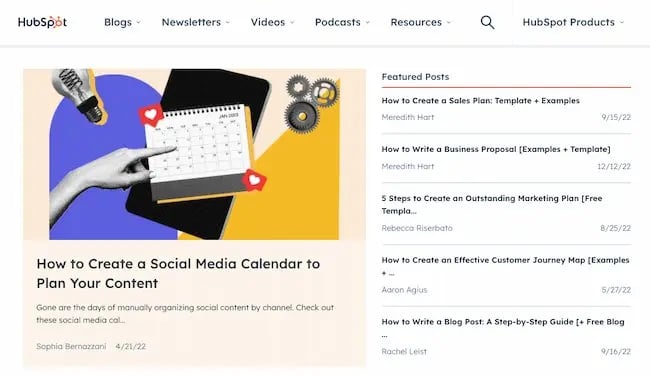
If you're still looking for more curated content inspiration, these HubSpot resources are a great place to start:
The Marginalian
Formerly Brain Pickings, this blog is one of the best-known visions of curated content online. This site combines inspiration from art, science, and literature through the lens of its creator, Maria Popova.
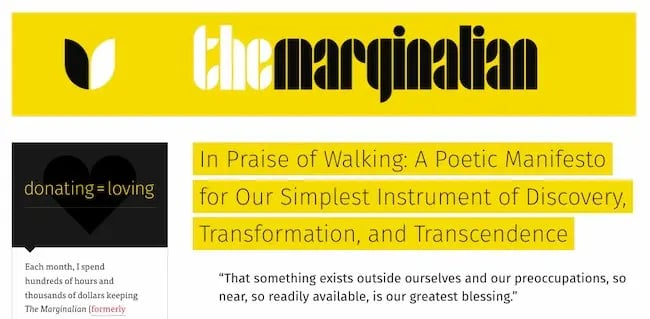
Some of its top posts include:
- Joan Didion on Keeping a Notebook
- The Gashlycrumb Tinies: A Very Gorey Alphabet Book
- What the Popeye Mythology Teaches Us about How Error Spreads
Sparktoro Trending
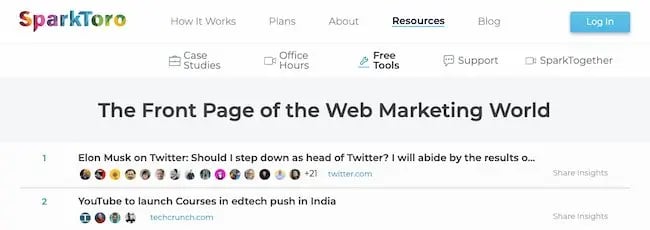
Sparktoro's tools focus on audience intelligence, but this side project also offers a lot of value for content curators. It tracks hot topics in marketing based on the number of shares from people in the industry.
HuffPost

This news aggregator has had a pulse on celebrity ideas since 2005. The political sections of this site tend to get the most notice, but the scale of this curated blog makes it a great source of ideas for any curious creator.
but does it float
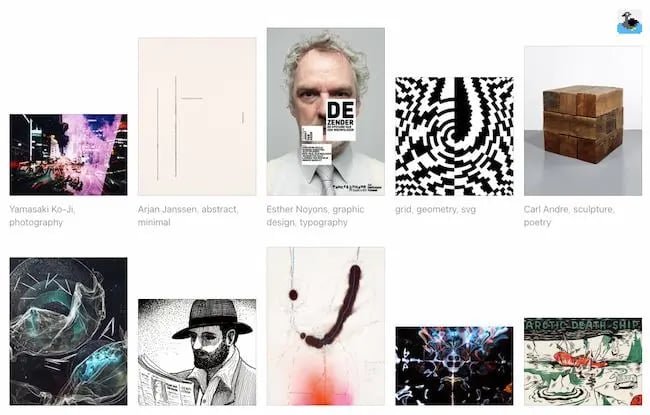
This curated blog of visual content is a rich resource. Full of photography, illustration, design, and other creative inspiration, this site is a constant source for visual trend-seekers. This is also a good example of content curation from multiple points of view since the blog has two curators.
Buzzfeed
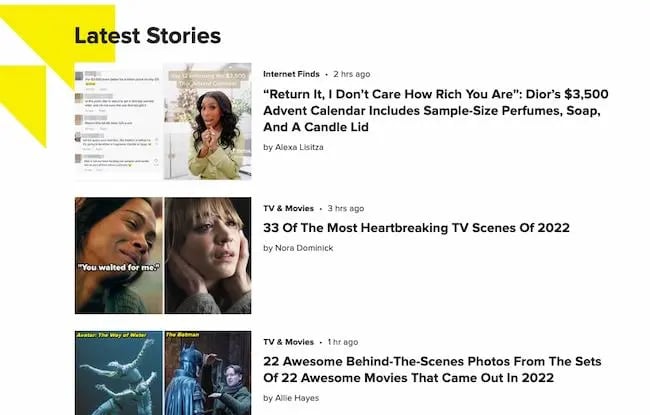
Buzzfeed has been a source of inspiration for curated lifestyle blogs since 2006. With its popular listicles, quizzes, and pop culture stories, it's also a great source of user-generated content.
If you're looking for more blog curation examples, check out these lists of the best sales and customer service blogs.
Content Curation Isn’t Just for Blogs and Social Media
Curated content is a simple and fun way to develop engaging and useful content for your audience. It's a strategy for promoting ideas from your network, an option to keep up with trends, and a solution for the blank spaces in your editorial calendar. So start collecting and adding your own value and insights. You never know what the next secret to growth might be.
Editor's note: This post was originally published in August 2014 and has been updated for comprehensiveness.

Content Creation
![12 ebook templates for InDesign, PowerPoint, and Google Docs [free download]](https://53.fs1.hubspotusercontent-na1.net/hubfs/53/free-ebook-templates-1-20240529-4957105.webp)




![How to Create an Ebook From Start to Finish [Free Ebook Templates]](https://53.fs1.hubspotusercontent-na1.net/hubfs/53/how-to-create-an-ebook-1-20250128-3015373.webp)
![How to Write a Content Brief [Template + Examples]](https://53.fs1.hubspotusercontent-na1.net/hubfs/53/content-brief-1-20250120-7521165.webp)