
The idioms are clear: There’s more than meets the eye. Never judge a book by its cover. All of these apply to websites and off-page SEO as much as they do people and personalities.
![→ Download Now: SEO Starter Pack [Free Kit]](https://no-cache.hubspot.com/cta/default/53/1d7211ac-7b1b-4405-b940-54b8acedb26e.png)
Before HubSpot, I spent a decade helping clients optimize their websites every way I could. I’d compress images, conduct keyword research, update site structure, write content, and interlink pages, just to name a few. But, today, if I neglected off-page optimization, they’d likely struggle to rank in search engines and even AI systems.
A website is still vital to SEO strategy, but in 2026, marketers can’t stop there. Off-site brand mentions, reviews, digital PR coverage, social media, and E-E-A-T signals all shape how Google and AI-powered answer engines rank your authority.
This guide breaks down everything you need to know to succeed with off-page SEO: what off-page SEO includes, which strategies work today, how to build quality backlinks, and how to measure your results.
Table of Contents
- What is Off-Page SEO, and why does it matter?
- On-Page SEO vs. Off-Page SEO
- How Off-Page SEO Has Evolved
- Essential Off-Page SEO Strategies
- Building High-Quality Backlinks: A Modern Approach
- How to Measure Off-Page SEO Success
- Frequently Asked Questions About Off-Page SEO
- Off-Page SEO is the missing link in your marketing.
.png)
Complete SEO Starter Pack
An introductory kit to optimize your website for search.
- Increase your organic traffic.
- Plan your keyword strategy.
- Debunk SEO myths.
- Build a blog strategy.
Download Free
All fields are required.
Form not available
What is Off-Page SEO, and why does it matter?
Off-page SEO is any action taken outside your website that impacts your search engine ranking. It’s external proof that search and AI engines use to decide whether your site is trustworthy, relevant, and authoritative. It’s third-party evidence to vouch that you’re actually as great as you say you are.
On-page SEO (like your content, keywords, and site structure) tells Google what your page is about. Meanwhile, off-page SEO tells Google whether to believe you.
I mean, you can’t expect anyone just to take your word for it, right? Without external validation, even the best content can struggle to reach page one.
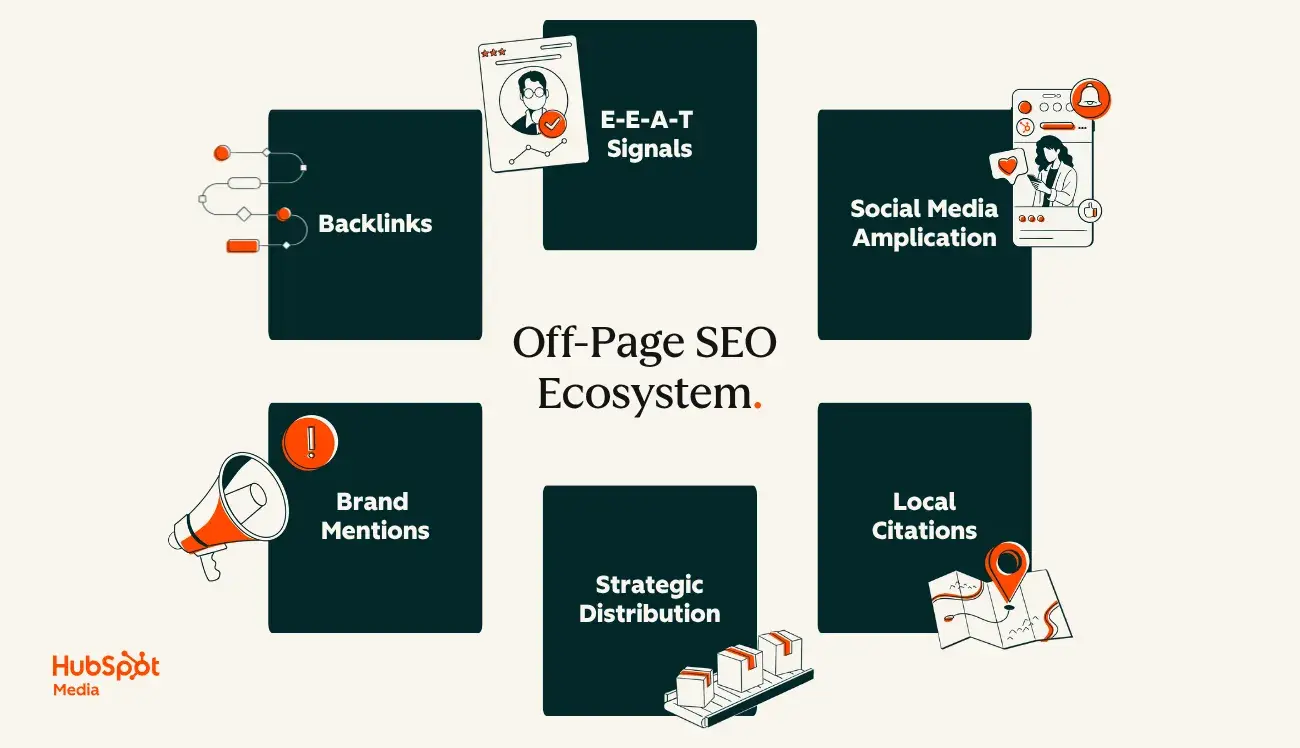
The Core Components of Modern Off-Page SEO
According to Ahrefs, over 90% of pages ranking in the top 10 on Google have at least one referring domain. To be more specific, pages in the #1 position have an average of 3.8x more backlinks than the others. But off-page SEO isn’t just about backlinks anymore.
Modern off-page signals include:
- Backlinks: Links from other websites leading to yours, which act as votes of confidence and remain one of the top correlating factors for rankings.
- Brand mentions: References to your brand name online, even without a link. Google uses these to assess your reputation and for entity recognition.
- E-E-A-T signals: External validation of your Experience, Expertise, Authoritativeness, and Trustworthiness, earned through third-party coverage, author credentials, and reviews.
- Social media amplification: This includes social shares, engagement, and distribution that expand content reach and increase opportunities for earned links.
- Local citations: Listings in directories and review platforms (i.e., Yelp, Google My Business) that signal relevance and trust for location-based searches.
But why does this all matter so much in ranking?
Why Off-Page SEO Drives Rankings
Google’s PageRank algorithm is widely considered the foundation of modern search. It was built on the idea that a link from one page to another is an endorsement. So, the more high-quality endorsements your page earns, the more trustworthy it appears.
That logic still holds, but it was flawed in a way. Sure, sites could be talking about you and linking to you, but what if what they were saying wasn’t positive?
With that in mind, PageRank has evolved to include brand consistency, third-party mentions, review sentiment, and editorial coverage.
Google’s Quality Rater Guidelines instruct evaluators to look beyond what a website claims about itself and consider what others say. They read:
“Look for articles, references, recommendations by experts, and other credible information written by people about the website. High-quality news articles and informational articles … can help you learn about a company and may include information specific to reputation, such as awards and other forms of recognition, or also controversies and issues.”
Put together, these signals paint a much more detailed picture of your brand’s authority and relevance; things your own website can't be trusted to self-report. That external reputation directly influences rankings.
On-Page SEO vs. Off-Page SEO
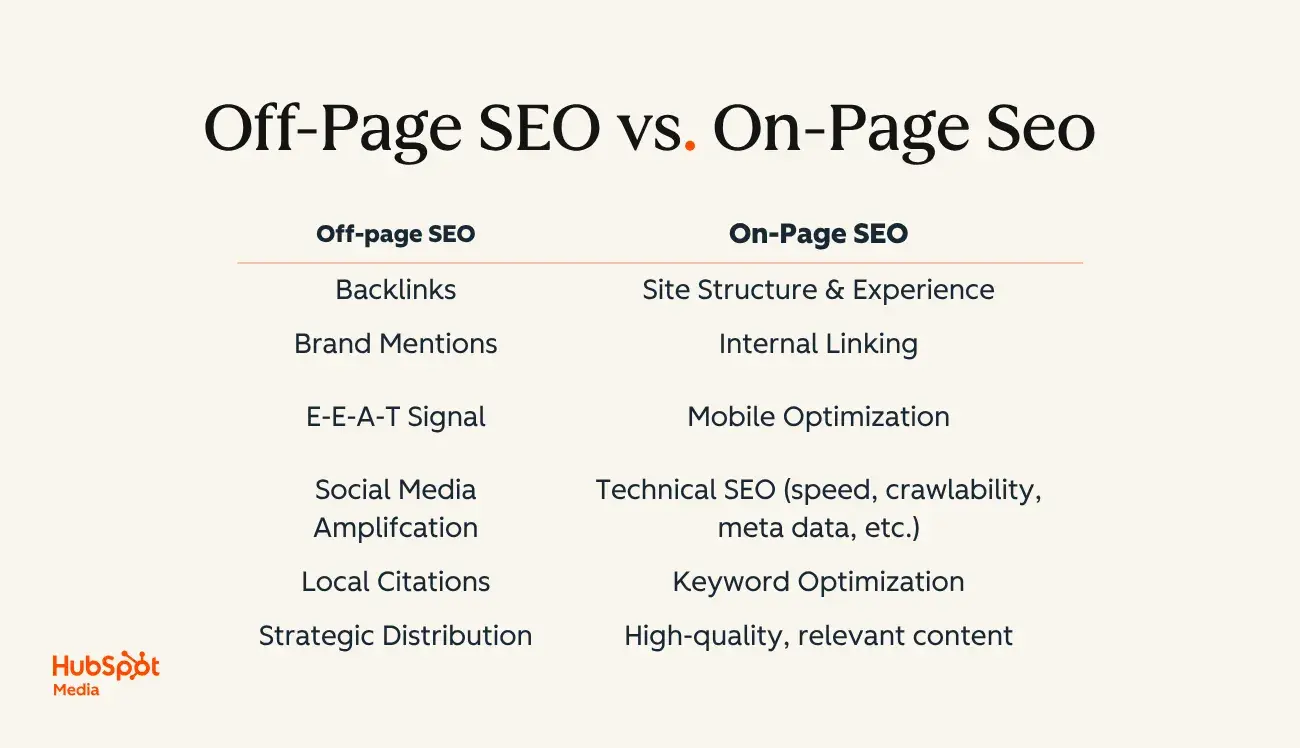
In simple terms, on-page SEO is everything you control on your own website. Off-page SEO is everything off of it.
On-page actions include optimizing your content, using target keywords, improving page speed, fixing technical or backend issues, and building internal links.
HubSpot has tools to help with all of these areas, but these free guides are also a good place to start:
- Keyword optimization
- Technical SEO (e.g., crawlability, alt text, structured data)
- On-page SEO best practices
Off-page actions include earning backlinks, getting press coverage, generating reviews, building citations, and engaging across social platforms.
Both matter equally. On-page SEO sets the foundation. Off-page SEO determines whether Google ranks you above the competition.
How Off-Page SEO Has Evolved
Off-page SEO has shifted dramatically over the past decade. What began as a numbers game (more links, rank higher) has become a much richer strategy focused on brand building, entity recognition, and multi-signal trust.
From Links to Trust Signals
Early off-page SEO was centered on the idea that the more links you had, the higher you ranked. That led to widespread black hat practices like link farms, paid links, comment spam, and private blog networks.
Google’s algorithm updates systematically devalued these tactics. So, today, the focus has moved from link building to trust building.
Backlinks still matter, but they’re now one part of a broader trust framework that includes brand mentions, reviews, citations, brand consistency, and overall, online reputation.
The E-E-A-T Shift
Google’s shift to E-E-A-T as a quality framework has made off-page SEO more nuanced. External validation, like who links to you, who mentions you, and what others say about you, now shapes how search engines assess your expertise and authority.
This means that your off-page SEO strategy is, in many ways, your reputation strategy. Expert author coverage, industry mentions, third-party citations, and positive reviews all contribute to how Google scores your E-E-A-T.
Off-Page Signals’ Impact on AI Visibility
AI-driven search relies on clear entity, authority, and trust signals. Tools like ChatGPT, Perplexity, and Google’s AI Overviews are trained on the web, which means the same sources that build your off-page SEO authority also influence whether AI answers cite your brand.
The top ChatGPT sources identified by Semrush’s AI Visibility Index were nearly all publications with strong off-page authority: Wikipedia, Forbes, NerdWallet, TechRadar, and CNBC.
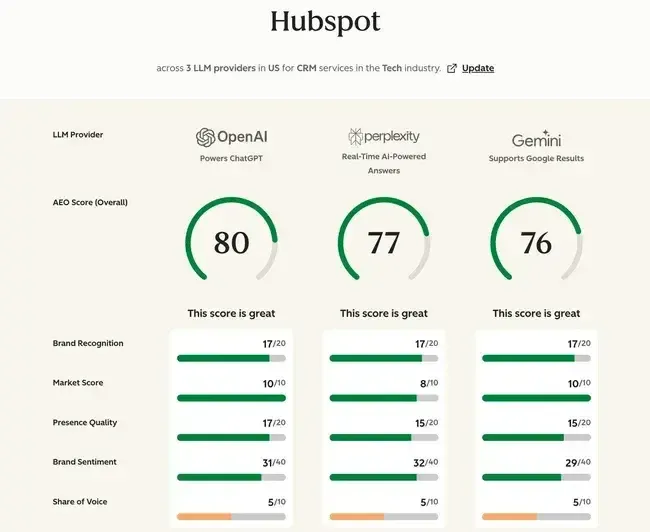
Curious how you’re currently performing in AI systems? Our free AEO grader shows you how ChatGPT, Perplexity, and Gemini characterize your brand based on their training data, as well as tips on how to improve.
Why Traditional Link Building Is Not Enough
Earning high-quality backlinks is still essential, but link building alone is no longer a complete off-page SEO strategy.
From brand mentions and review sentiment to expert visibility, Google processes a wide range of off-page signals. A brand that only focuses on link acquisition while ignoring these signals will likely be outranked by competitors who invest in the full picture.
Ok, so off-page SEO is pretty important. But if so much is not in your control, how can you improve it?
Complete SEO Starter Pack
An introductory kit to optimize your website for search.
- Increase your organic traffic.
- Plan your keyword strategy.
- Debunk SEO myths.
- Build a blog strategy.
Download Free
All fields are required.
Form not available
Essential Off-Page SEO Strategies
While you can’t control what happens or is said outside of your website, there are certainly a number of off-page SEO techniques you can use to better your chances.
Here are six tried-and-true off-page SEO strategies that can help build the authority, trust, and visibility brands need.
1. Refined, Strategic Link Building
Backlinks are still one of the most powerful off-page SEO assets a marketer can have. But success isn’t just about volume as it once was.
Brands need backlinks from sources that genuinely matter to your audience and industry. That means high-quality backlinks from relevant, authoritative websites that carry the most weight in search ranking.
For example, if you sell software, Forbes linking to one of your pages will support you more than a link from a customer's Tumblr blog. (Sorry, Tumblers.)
A 2025 survey of SEO professionals found that businesses are catching on.
Nearly 49% of respondents consider digital public relations (PR) the most effective link-building tactic, ahead of guest posting (16%) and linkable assets (12%). In other words, marketers are leaning away from transactional link schemes and sponsored placements toward earned, editorial coverage.
We’ll break down modern link building further later in this guide, but for now, here’s the short version of what you can do with your link-building strategy.
Digital PR
Pitch data-led stories, expert commentary, and original research to journalists and publications in your niche. If you create an annual report with data that can’t be found elsewhere, for instance, other websites will likely link to you as their source.
Broken-link mining
Find broken links on authoritative sites, then reach out through email or social media to offer your content as a replacement. Here’s an example of a broken link outreach email I got in my own inbox:
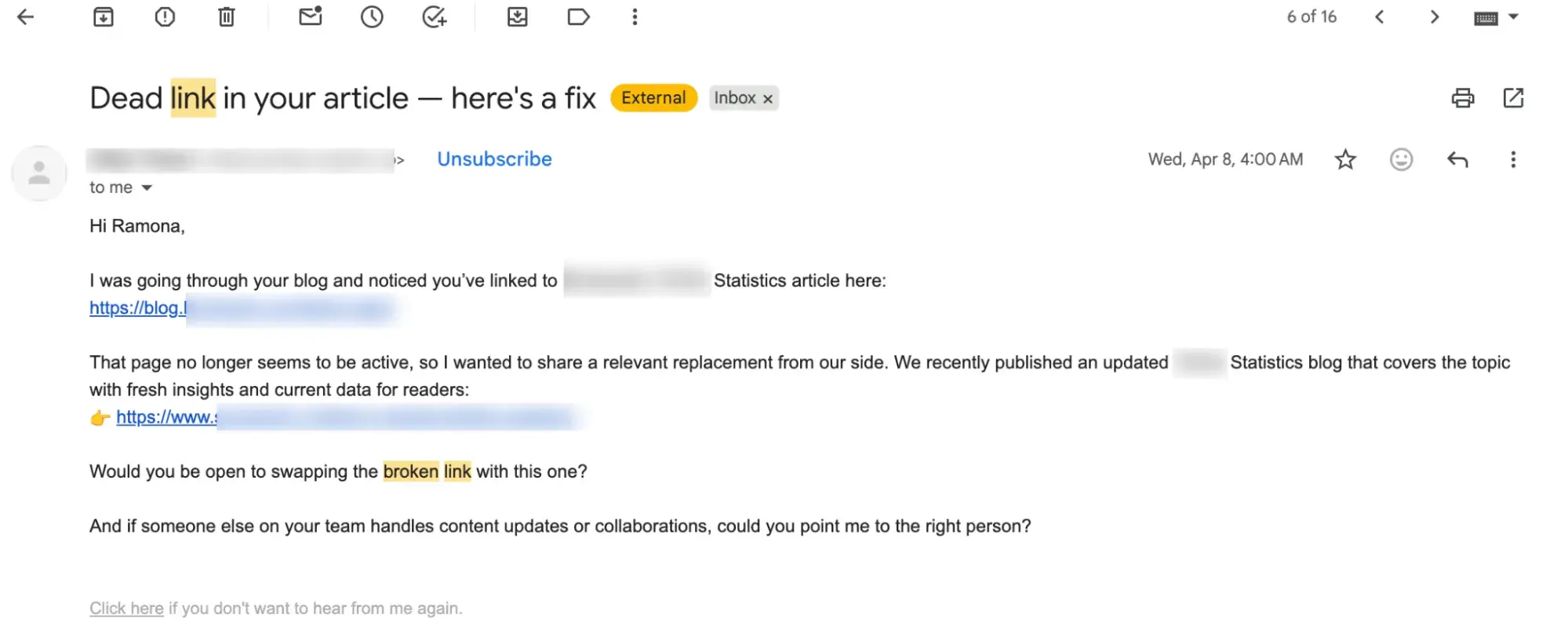
I'm a fan of this approach because it's not only self-serving. It offers value to both you and the website you're seeking a link from.
Expert contributions or “round-ups.”
Contribute to round-ups, podcasts, and industry publications as a subject matter expert. Sites like HARO can help you source relevant opportunities.
Databox is no stranger to publishing expert roundups. This is a strategy they have been using for years, and one even yours truly took part in.
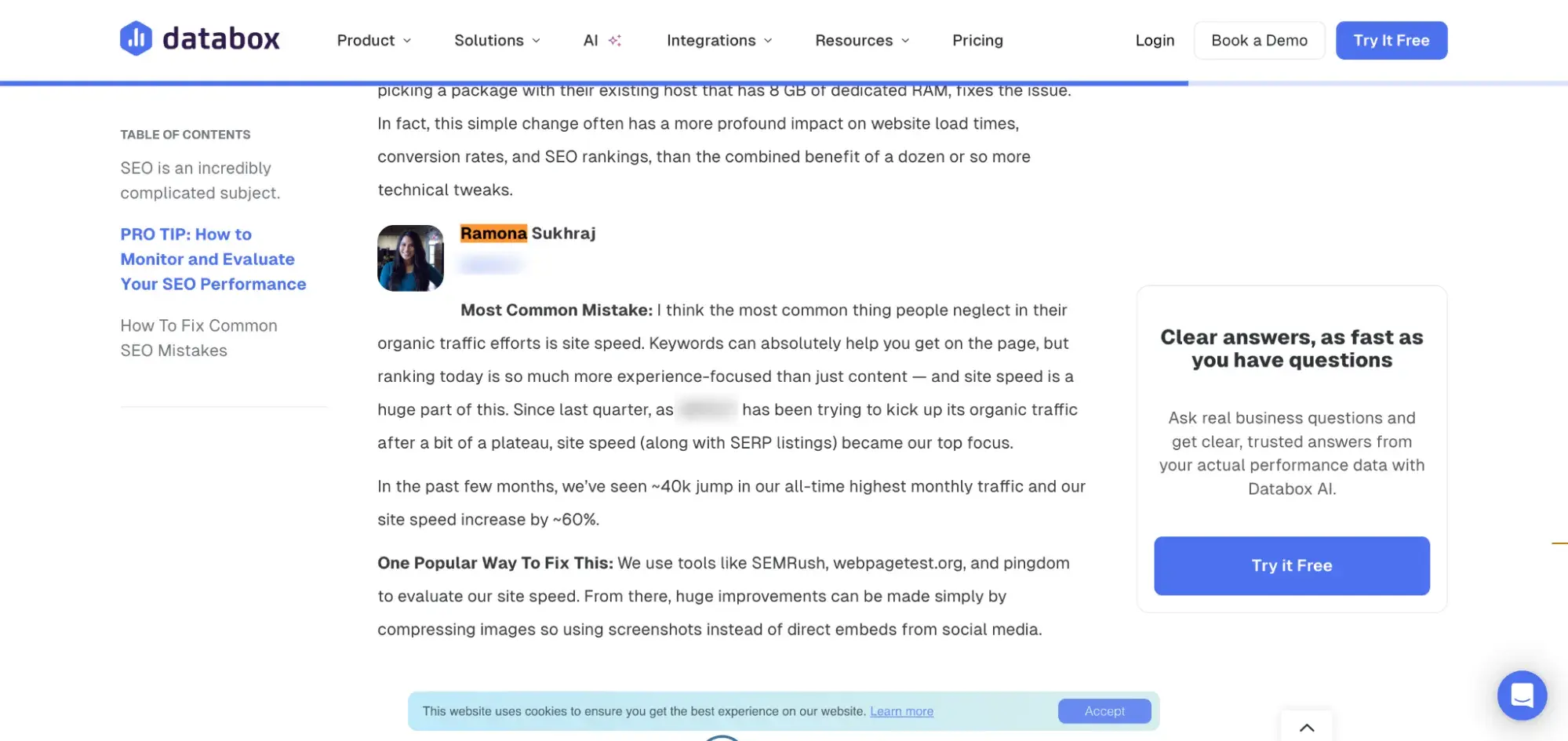
By contributing to this article, I shared some of my industry expertise and secured a high-quality, relevant backlink for my then-employer.
Resource page and directory outreach
Many online communities have directories or resource pages for members to reference. Take this example, the “Caribbean Mental Wellness Directory” by the Indo-Caribbean mental health platform Brown Gyal Diary.
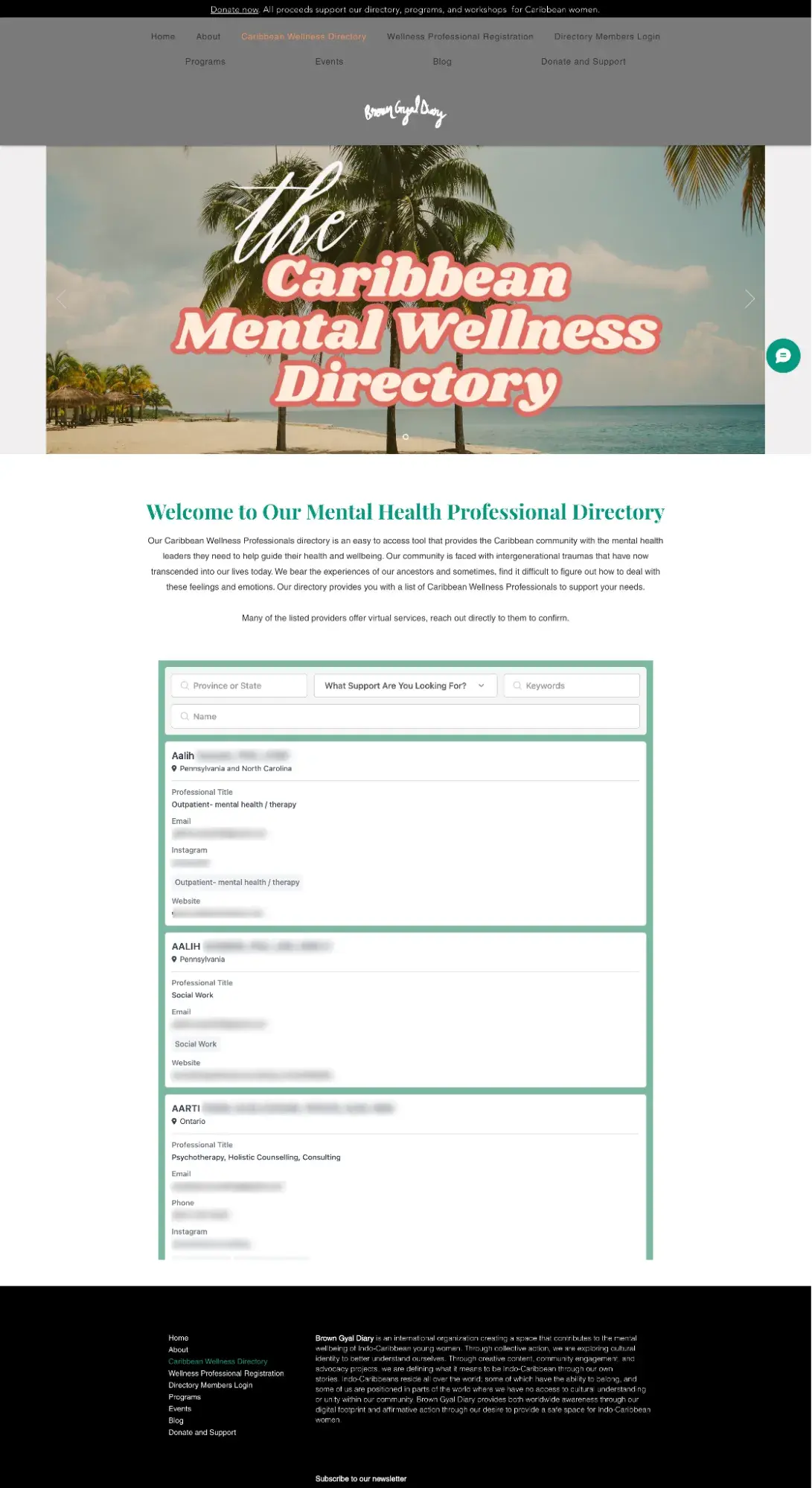
The hosting website gets to offer a valuable resource to its community, and professionals featured get a link and awareness. Look up relevant and popular options in your industry and sign up or reach out to be included.
Partnerships and co-marketing
Collaborate with complementary brands or influencers on content, webinars, tools, or offers that earn mutual links.
Pro Tip: Avoid “black hat” link-building tactics like buying links or spamming forums or comment sections. These can actually hurt your search performance and lead to manual penalties from Google.
Plus, they just don’t work long-term.
When a website shares a positive review, link, or mention, you earn that. It’s authentic proof of your credibility and quality. When you pay for one and don’t live up to the hype, it’s only a matter of time before people find out through a bad review or, worse, their own negative experience.
Do right by your customers and audience. Put in the effort with the link-building tactics I shared, and your reputation will start earning coverage on its own.
Complete SEO Starter Pack
An introductory kit to optimize your website for search.
- Increase your organic traffic.
- Plan your keyword strategy.
- Debunk SEO myths.
- Build a blog strategy.
Download Free
All fields are required.
Form not available
2. Brand Mentions and Citations
When your name is used in articles, reviews, forums, and directories, search engines understand you better and what you stand for. We call these brand mentions. Brand mentions support entity recognition and trust signals, even if they are unlinked (or cited).
Google’s John Mueller has confirmed that Google “picks up [mentions] as a mention on another website,” even without a hyperlink, and 80.9% of SEO professionals agree.
To build brand mentions and citations:
- Set up Google Alerts to track unlinked mentions of your brand name.
- Reach out to sites that mention your brand without a link and request attribution.
- Pursue relevant PR campaigns, guest posts, collaborations, and podcast appearances.
- Build consistent citations in business directories relevant to your industry.
Consistent NAP (name, address, phone number) data across all digital platforms also strengthens your entity footprint, especially for local SEO.
3. E-E-A-T Signal Development
For those not familiar with it, Experience, Expertise, Authoritativeness, and Trustworthiness, or E-E-A-T, is Google’s framework for assessing whether content and websites deserve to rank, and it relies heavily on off-page signals.
Now, E-E-A-T isn't a direct algorithmic score, but Google uses related criteria to determine content quality. The external signals that matter most include:
- Third-party coverage: This refers to the brand mentions and citations we discussed earlier. Being cited in reputable publications, news sites, and Wikipedia builds authoritativeness.
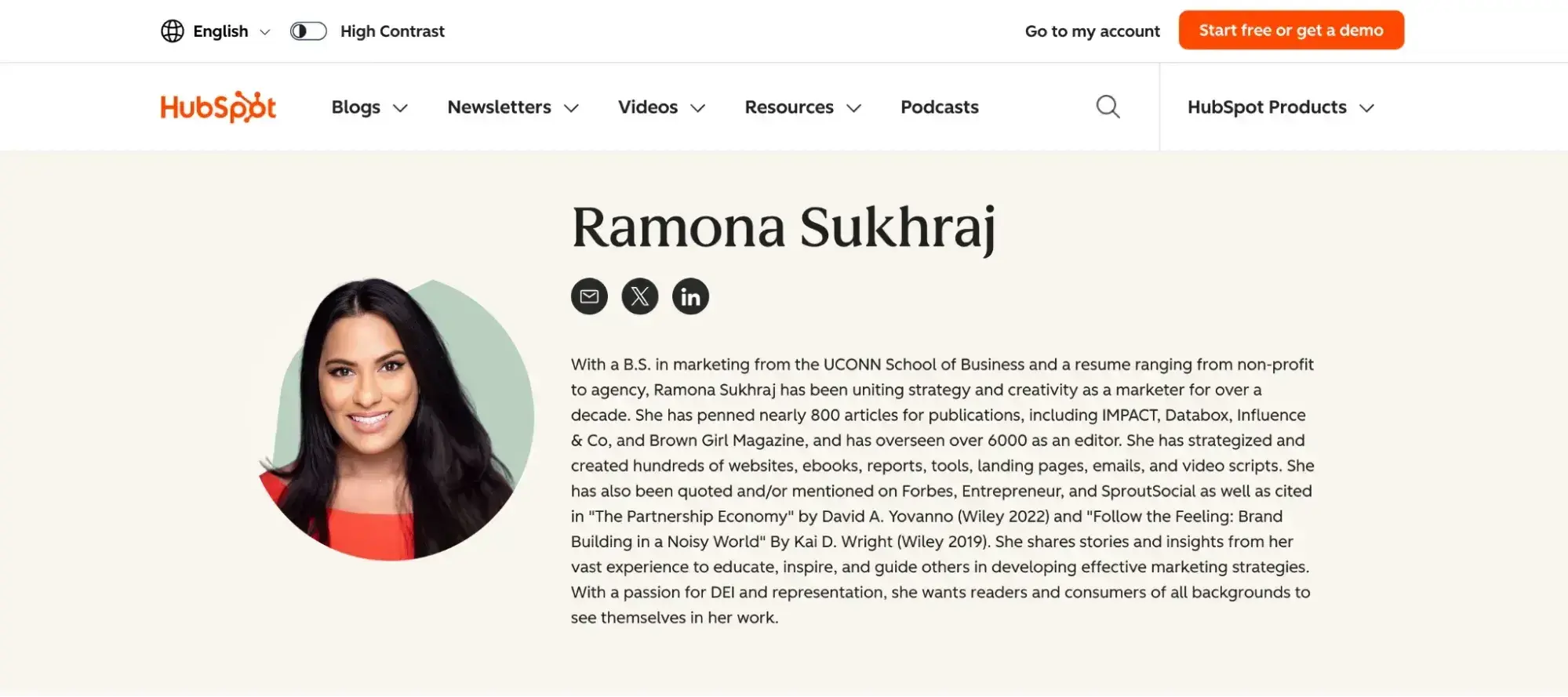
- Expert author credentials: Author bios with verifiable experience, credentials, and links to their professional presence strengthen expertise signals. So, make sure your articles have full names, photos, and a few details about your writer’s expertise.
- Reviews and testimonials: Positive third-party reviews on Google, Yelp, and industry platforms build trust. They can be especially valuable for local SEO.
- Transparent business signals: Clear contact information, About pages, HTTPS, and editorial policies all factor into trustworthiness.
For “Your Money Your Life” (YMYL) topics like health, finance, and legal, E-E-A-T requirements are especially strict. Building authoritativeness on these topics requires consistent validation from credible external sources, not just well-written content.
4. Social Media Amplification
This likely goes without saying, but social media is a powerful business tool.
In the case of off-page SEO, social media amplifies content reach and link opportunities. While social shares aren't a direct factor in search rank, they expand content distribution, drive awareness, and increase the chance that journalists, bloggers, influencers, industry voices, or even consumers will link to your content.
Social media also signals “branded search volume,” a metric Google associates with legitimate, recognizable brands. More people searching for your brand by name tells Google that your entity is real, trusted, and in demand.
To improve your social media amplification:
- Share new content across relevant platforms immediately upon publication.
- Engage with communities and industry conversations rather than just broadcasting. Look for relevant and active communities on Reddit, Facebook Groups, and LinkedIn Groups.
- Use social media to connect with journalists and creators who cover your content or industry.
- Repurpose content into formats native to each platform (carousels, short videos, threads) to maximize reach. This helps you get the most out of your content, but also appeal to different audiences with the same information.
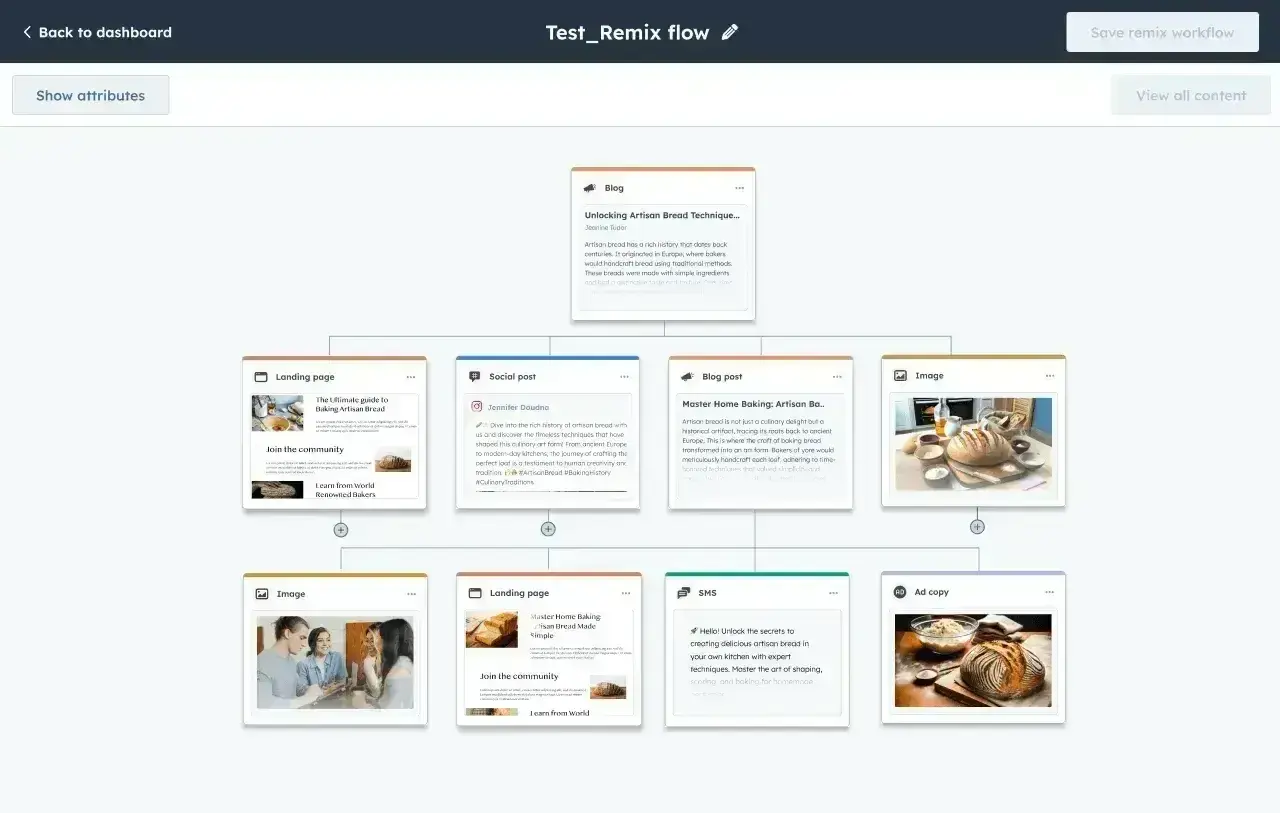
Pro Tip: AI can help you repurpose content quickly and in line with platform specs. For example, you can ask ChatGPT or Claude to turn a blog article into shorter posts for LinkedIn or even threads on X.
There are even dedicated repurposing tools like HubSpot’s Content Remix, so you don’t have to worry about getting your prompt right.
5. Local SEO Optimization
Local SEO uses citations, reviews, and business directory listings to build visibility for location-based searches. If your business serves customers in a specific area (e.g., a service provider, brick-and-mortar shop, or restaurant), local off-page signals are critical.
According to BrightLocal, 46% of Google searches have local intent, and 76% of people who perform a local search visit a business within 24 hours. So, don’t sleep on it.
To improve your local SEO:
- Create and Optimize a Google Business Profile: Claim, verify, and fully optimize your profile. Complete profiles are significantly more likely to appear in local pack results.
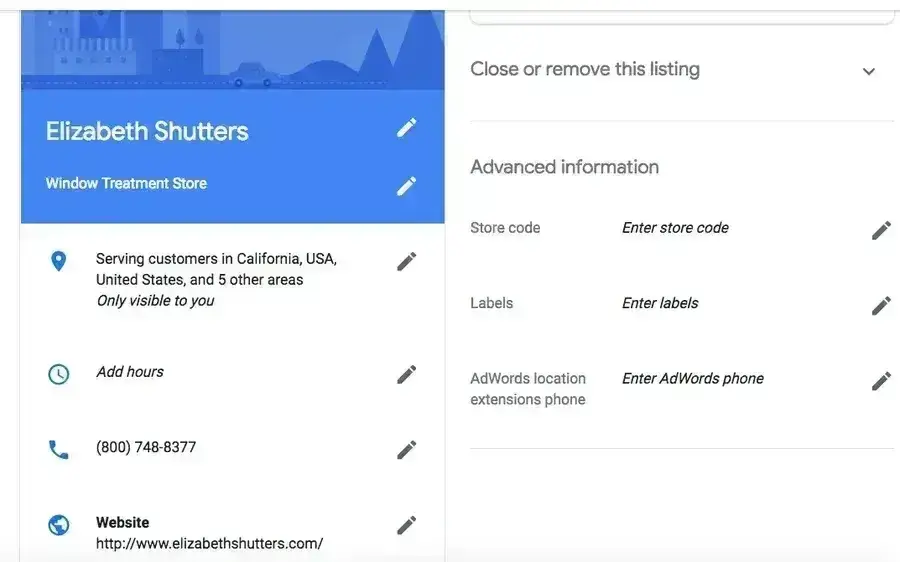
- Build local citations: Get listed in local and national business directories like Google Business, Yelp, TripAdvisor, and industry-specific platforms. These expand your web presence and give you more chances of getting found, in addition to helping your off-page SEO.
- Maintain NAP consistency: Make sure your name, address, and phone number are identical across all directories and platforms. If your NAP on Google says one thing and your website says another, it confuses your audience and search engines.
- Get More Reviews: Actively encourage customers to leave reviews (especially happy or return customers) and respond to all reviews (positive and negative) promptly. Reviews influence local trust and visibility.
Reviews also have a measurable impact on conversions. According to review research from 2025, positive review profiles can lift conversion rates 15-20% and correlate with up to 18% revenue growth.
Plus, according to Capita One, reviews influence 93% of consumer purchase decisions, with 97% of consumers reading online reviews of local businesses before visiting.
See HubSpot’s resource on local SEO strategy for more comprehensive guidance.
6. Strategic Content Distribution
In my nearly 15-year marketing career, content distribution has always been one of the most valuable but underutilized tactics. And I get it, it can be extremely time-consuming, but in this saturated, AI-aided market, it can no longer be neglected.
Content distribution is the off-page work that makes your on-page content discoverable. It gets your work in front of the right audiences through the right channels, helping you earn links and mentions.
Try these distribution tactics to build off-page authority:
- Guest blogging: Publish expert content on relevant, authoritative sites in your niche. This can build brand awareness, earn high-quality backlinks, and reach new, qualified audiences.
- Content syndication: Republish content on platforms like Medium, Substack, or LinkedIn (with canonical tags) to broaden reach.
- Newsletters and email: Share content through newsletters and partner distribution lists to drive referral traffic. While email itself doesn’t impact off-page SEO, it does get the content in front of more people who may share it in a way that does.
Read: Newsletter Marketing: How to Create an Email Newsletter People Actually Read - Podcasts: Appear as a guest or contribute expert commentary to podcast episodes in your industry. Once again, this is a chance to get your name out there and also possibly gain links and mentions through show notes, transcriptions, and more.
Read: Podcasting: What You Need + 9 Steps To Get Started - Infographics and data assets: Visual data assets and original research tend to earn significantly more backlinks than standard articles. Creating eye-catching videos, carousels, and more is a great way to garner distribution, especially social media shares.
Pro Tip: We may live in a time of 30-second videos and one-word captions, but studies show content over 3,000 words still earns 3.5x more backlinks than shorter articles. Original data and research assets are especially effective for earning editorial links through digital PR campaigns.
Complete SEO Starter Pack
An introductory kit to optimize your website for search.
- Increase your organic traffic.
- Plan your keyword strategy.
- Debunk SEO myths.
- Build a blog strategy.
Download Free
All fields are required.
Form not available
Building High-Quality Backlinks: A Modern Approach
Not all backlinks are created equal. A single link from a relevant, high-authority publication can outperform dozens of links from low-quality sites. But how do you know what links are worth it and which aren’t?
Here’s how to evaluate and earn the backlinks that actually help your off-page SEO.
What makes a backlink high-quality?
Before you can decide what backlinks you want, you need to understand what a good backlink is for off-page SEO.
Strong backlinks share these characteristics:
- Topical relevance: This means the linking site covers topics related to yours. For instance, a link from a tech blog carries more weight for a SaaS company than a link from a cooking site.
- Editorial placement: This means the link appears naturally within body content, not in a footer, sidebar, or paid placement. Contextual links are more powerful because they are less likely to be influenced by compensation.
- Natural anchor text: The anchor text is descriptive and relevant, not keyword-stuffed or generic. Partial-match anchor texts are the most trusted approach, preferred by 41.7% of SEO professionals.
- Authority of the linking domain: Links from high-domain-authority (DA/DR) sites pass more ranking equity. More on that in the next section.
- Organic traffic on the linking page: A link on a page that actually gets high organic traffic signals that the page itself is valued by search engines and users, and organic performance always speaks louder than paid.
Authority and organic traffic are just two of the key metrics you can use to evaluate backlink opportunities.
Evaluating Link Quality: Key Metrics
While much of the criteria we shared so far is more anecdotal, key metrics are measurable. Marketers can use them to objectively decide if a backlink is worth their time.
That said, before pursuing a backlink opportunity, assess:
- Domain Rating (DR) or Domain Authority (DA). While DA is not an official metric to search engines, there are several tools online to help you gauge it, like this free checker from Moz. Ahrefs and Semrush also have options.
- Organic traffic to the linking page. Low-traffic pages offer minimal value. If no one is viewing the page, how will you build awareness?
- Outbound link profile. Sites with excessive outbound links dilute link equity. I know what you’re linking: “What about directories?” Of course, directories are still a valuable backlink, but opt for those that are selective and prioritize quality.
- Editorial standards. This is what I meant by looking for opportunities that are selective. Ask yourself, does the site publish quality content, or does it exist solely to sell links? A backlink means nothing if everyone has it.
- Anchor text distribution across the site. Natural content has a mix of branded, partial-match, and generic anchors. If their links seem forced, they may not have the best credibility.
Pro Tip: Use Google Search Console to review your existing backlink profile. Pair it with Ahrefs or Semrush for competitor link analysis and prospecting. HubSpot’s website SEO software can also surface on-site SEO issues that could undermine your off-page efforts.
Identifying and Removing Toxic Links
There’s a lot of talk about toxicity these days, and backlinks are no different.
Toxic backlinks are links that come from spammy, irrelevant, or manipulative sources. We typically call these “black hat.” They can hurt your search rankings or even trigger a manual penalty from Google.
But how do you know when a link is black hat?
Signs of a problematic backlink profile include:
- High concentration of exact-match anchor text (a signal of unnatural manipulation)
- Links from known link networks or private blog networks (PBNs)
- Sudden spikes in backlink volume from uncommon sources
- Links from sites flagged for spam or malware
To combat toxic backlinks, you need to stay vigilant.
Conduct regular backlink audits using Ahrefs, Semrush, or Google Search Console. If you identify harmful links you can’t get removed through outreach, use Google’s Disavow Tool to signal that those links should be ignored.
Complete SEO Starter Pack
An introductory kit to optimize your website for search.
- Increase your organic traffic.
- Plan your keyword strategy.
- Debunk SEO myths.
- Build a blog strategy.
Download Free
All fields are required.
Form not available
How to Measure Off-Page SEO Success
Off-page SEO success is measured by referring domains, brand mentions, referral traffic, rankings, and conversions.
Here are the key off-page SEO key performance indicators and metrics to track:
- Referring domains: The number of unique domains linking to your site. A growing, diverse referring domain profile is a sign of a healthy off-page strategy.
- Backlink quality: Average domain authority of linking sites, percentage of dofollow links, and topical relevance of referring domains.
- Brand mention frequency: Track unlinked and linked mentions using tools like Google Alerts, Mention, or Ahrefs Content Explorer. HubSpot’s Social Media Management tools can also notify you of brand mentions across several social media platforms.
- Referral traffic: Traffic arriving from external links. Strong referral traffic signals that your backlinks are coming from pages with real audiences. HubSpot Reporting can help you break down website traffic into 15+ different sources.
- Branded search volume: How often people search for your brand by name. Growth here signals improving brand recognition.
- Organic rankings and traffic: Ultimately, off-page SEO should translate to improved rankings for target keywords and increased organic traffic. You can track your organic rank using tools like Semrush and Ahrefs.
Use Google Search Console for backlink and traffic data. Pair it with a dedicated SEO tool for deeper backlink analysis, competitor benchmarking, and brand monitoring.
HubSpot’s SEO tools give you insight into the role of search in your greater marketing strategy and business. It integrates content, traffic, and conversion tracking so you can connect your off-page efforts to real business outcomes, not just rankings.
For an overview of the best tools available, see our guide to website SEO software.
Frequently Asked Questions About Off-Page SEO
What Are Real Examples of Off-Page SEO?
Real examples of off-page SEO include:
- Earning a backlink from an industry publication through a digital PR campaign
- Getting mentioned in a journalist’s round-up article (with or without a link)
- Guest posting on an authoritative blog in your niche
- Being cited as an expert source in a podcast or video
- Receiving positive Google reviews that appear in local search results
- Having your business listed in industry-specific directories
- Getting shares and discussion of your content across social platforms
Is Off-Page SEO Still Relevant?
Yes, off-page SEO is more relevant than ever.
As Google has evolved from link-counting to trust-building, off-page signals have expanded in scope and importance. E-E-A-T, AI search visibility, and entity recognition all depend heavily on the external signals that off-page SEO generates. In fact, the rise of AI-powered answer engines makes off-page authority even more critical.
LLMs are trained on web data, and the sources they cite most are those with the strongest off-page presence.
How Do You Measure Off-Page SEO Success?
Track these metrics to measure off-page SEO performance:
- Referring domains (growth and quality)
- Backlink profile health (domain authority, follow ratio, anchor text diversity)
- Brand mention volume and sentiment
- Referral traffic from external sources
- Organic keyword rankings for target terms
- Branded search volume
- Local pack appearances and citation consistency (for local businesses)
What Are Common Off-Page SEO Mistakes?
The most common off-page SEO mistakes include:
- Buying links: Paid links violate Google’s guidelines and can trigger manual penalties.
- Prioritizing quantity over quality: One link from a relevant, high-authority site outperforms hundreds from low-quality domains.
- Ignoring brand reputation: Negative reviews, unmanaged mentions, and inconsistent citations all damage off-page authority.
- Overusing exact-match anchors: Anchor text that always uses your target keyword looks unnatural and can be flagged as manipulation.
- Skipping backlink audits: Toxic links accumulate over time. Regular audits and disavowing prevent penalties from building up unnoticed.
- Expecting fast results: Off-page SEO takes time. Industry data shows it typically takes 3+ months to see noticeable results from link-building efforts.
Off-Page SEO is the missing link in your marketing.
I’ll never be one to tell you that external validation matters, but off-page SEO may be the one exception.
Off-page SEO is the external validation that tells search engines and AI answer engines that your brand deserves to rank. Backlinks build authority. Brand mentions build entity recognition. Reviews and citations build trust. Together, they form the credibility layer that makes everything else work.
The brands winning in search today are taking their online reputation seriously and investing in these areas.
If AI search visibility is part of your goals, tools like HubSpot AEO let you track how your brand appears across answer engines, benchmark against competitors, and prioritize the actions that will actually move the needle. And our free AEO Grader gives you a scored snapshot of where you stand today — so you know exactly what to fix first.
For a deeper look at your full SEO strategy, explore HubSpot’s SEO strategy guide or download the free SEO Starter Pack to start building your baseline.
Editor's note: This post was originally published in May 2025 and has been updated for comprehensiveness.
Complete SEO Starter Pack
An introductory kit to optimize your website for search.
- Increase your organic traffic.
- Plan your keyword strategy.
- Debunk SEO myths.
- Build a blog strategy.
Download Free
All fields are required.
Form not available
Seo


![SEO audits: How to conduct one that drives traffic growth [+ checklist]](https://53.fs1.hubspotusercontent-na1.net/hubfs/53/seo-audit-1-20251217-6006144.webp)
.png)