For a team of ten reps, that’s the equivalent of losing one full-time employee to administrative tasks. As revenue teams scale, this coordination overhead compounds, creating bottlenecks that slow down deals and frustrate both reps and prospects.
Sales scheduling software addresses this challenge by automating meeting coordination, integrating directly with CRM systems, and intelligently routing prospects to the right rep at the right time. For teams evaluating sales software to schedule meetings, this guide compares the leading platforms to help find the solution that fits their workflow, tech stack, and sales goals.
Table of Contents
- What is sales scheduling software?
- Sales Scheduling Software vs. Appointment Scheduling Software
- Sales Scheduling Software Features That Matter At Scale
- 5 Best Sales Scheduling Platforms
- FAQs About Sales Scheduling Software
What is sales scheduling software?
Sales scheduling software is a specialized tool designed to streamline meeting coordination for revenue teams while maintaining context within their CRM. Unlike generic appointment schedulers, sales scheduling platforms integrate deeply with sales workflows, automatically logging meeting data, syncing with pipeline stages, and routing prospects based on territory, product line, or deal size.
The distinction matters because sales teams need more than just calendar availability. They need routing logic to assign demo requests to the right account executive, integration to eliminate duplicate data entry, and analytics to connect meetings to revenue outcomes.
HubSpot’s Sales Hub meeting scheduler, for example, exemplifies this approach by embedding scheduling directly into the CRM where sales teams already work. This integration ensures every booked meeting automatically updates contact records and appears in deal timelines.
Sales Scheduling Software vs. Appointment Scheduling Software
Sales scheduling software and appointment scheduling software serve different workflows and buyer contexts. Here are the core differences between sales scheduling software and appointment scheduling software.
Appointment Scheduling Software
Appointment scheduling software focuses on availability management and calendar coordination. These tools excel at scenarios like booking service appointments or coordinating one-off consultations. They typically offer features such as public booking pages, calendar syncing, and automated reminders. Appointment scheduling software is best for healthcare providers, consultants, and service businesses where the primary goal is filling appointment slots efficiently.
Sales Scheduling Software
Sales scheduling software is built for complex, multi-stakeholder sales processes. These platforms layer routing logic, CRM integration, and revenue analytics on top of basic scheduling. They handle scenarios like routing enterprise demo requests to senior account executives, coordinating multi-rep discovery calls with buying committees, and tracking which meetings convert to closed deals. The software integrates with sales engagement platforms, marketing and sales automation, and revenue intelligence tools to maintain context throughout the buyer journey.
To put it simply: appointment schedulers manage individual calendars while sales schedulers manage team capacity and territory assignments. Sales-focused platforms also track conversion rates and pipeline contribution, which becomes more important with scale. For revenue teams, these distinctions directly impact quota attainment and forecast accuracy.
Sales Scheduling Software Features That Matter At Scale
The best sales scheduling software features are the ones that help sales and revenue teams focus less on coordination and more on selling. As teams scale, scheduling features should help streamline meeting workflows. Below are the most important features to look for when evaluating sales scheduling software.
CRM Integration and Automatic Activity Logging
Native CRM integration ensures that every scheduled meeting automatically creates or updates contact records, logs activities, and appears in relevant deal timelines without manual data entry. This eliminates the gap between when a prospect books a meeting and when that information reaches the sales team.
Alexandros Papantoniou, a marketing consultant and sales expert, emphasizes the importance of seamless integration with CRM and existing marketing funnels when evaluating sales software.
“A big reason why we may reject a tool is if booking a meeting feels disconnected from the UX the prospect went through in the funnel,” he says. “This makes it feel too much like ‘outbound marketing.’”
HubSpot’s meeting scheduler syncs bidirectionally with the CRM, so changes made in either system are reflected instantly. When a prospect books a demo through a HubSpot meeting link, the contact record updates, the deal stage advances if configured, and the assigned rep is notified automatically — all without leaving the platform. This integration extends to custom properties, so teams can capture qualification information during booking and route accordingly.
Intelligent Routing and Round Robin Distribution
Routing logic distributes incoming meetings based on predefined criteria like geography, product expertise, deal size, or current workload. Round robin distribution cycles through available reps to balance meeting loads, while rules-based routing directs high-value prospects to senior closers.
Another aspect of intelligent routing to consider is time zone intelligence, suggests Papantoniou. “Having worked with various global and national agencies in sales positions, one of the features we look for is the ability to book meetings with team members in the appropriate time zones,” he says. “Generic meeting tools can translate time into the booker’s time zone and even do round-robin bookings. But for international companies, it’s important that UK enterprise partnership meetings only get booked with UK enterprise partnership staff, for example, not just the next available SDR.”
HubSpot’s routing capabilities allow teams to create sophisticated distribution rules directly within the CRM. Users can route based on contact properties — such as industry, company size, or region — lifecycle stage, or even custom qualification scores. The platform supports both equal distribution for balanced pipelines and weighted routing for teams with varying capacity or seniority levels.
Pooled Team Availability and Group Scheduling
Pooled availability displays combined calendar openings across multiple team members, allowing prospects to book with the first available rep rather than selecting from individual schedules. Group scheduling coordinates meetings that require multiple stakeholders, synchronizing calendars to find mutual availability.
For teams running multiple discovery calls or product demos daily, HubSpot’s group and round robin scheduling ensures prospects always see available slots without requiring individual rep selection. The system checks all eligible reps’ calendars simultaneously and presents unified availability, reducing time-to-meeting and improving conversion rates for high-intent leads.
Meeting Intelligence and Conversation Analytics
Advanced platforms use AI scheduling assistants to capture meeting recordings, generate transcripts, and surface key moments or action items from sales conversations. This intelligence feeds into coaching programs and helps managers identify best practices or areas for improvement across the team.
As an example, HubSpot’s Conversation Intelligence feature automatically records video calls, transcribes conversations, and highlights important topics discussed. The recordings sync to contact and deal records, creating a searchable archive of every customer interaction.
Meeting intelligence is essential not only to close deals but also for training and onboarding. Sales leaders can review calls for onboarding new reps, and individual contributors can revisit objection handling or technical questions discussed during discovery.
5 Best Sales Scheduling Platforms
For sales managers and revenue teams seeking to streamline meeting scheduling, reduce manual coordination, and improve sales productivity, these are the best integrated sales scheduling platforms to consider. Below is a comparison of the top sales scheduling software.
|
Sales Scheduling Platform |
CRM Integration |
Routing |
Round Robin |
Reporting |
Pricing |
|
HubSpot Sales Hub |
Yes |
Yes |
Yes |
Yes |
Starts at $20/month per seat |
|
Calendly |
Yes |
Yes, when integrated with a CRM |
Yes |
Yes |
Starts at $12/month per seat |
|
Chili Piper |
Yes |
Yes, when integrated with a CRM |
Yes |
Yes |
Starts at $22.50/month per seat |
|
Acuity Scheduling |
Yes |
No |
Yes |
Yes |
Starts at $16/month |
|
OnceHub |
Yes |
Yes |
Yes |
Yes |
Starts at $10/month per user; free plan available |
1. HubSpot Sales Hub

HubSpot Sales Hub provides comprehensive scheduling capabilities integrated directly into its CRM platform. The seamless integration makes it the natural choice for teams already using HubSpot for marketing or customer service, as well as for those seeking an all-in-one revenue platform.
Key sales scheduling features include:
- Meeting scheduler: HubSpot’s meeting scheduler enables teams to create personalized booking links with custom availability, buffer times between meetings, and embedded qualification forms. Reps can share links via email, embed them in website CTAs, or include them in sequences.
- Click-to-call: Initiate outbound calls directly from contact records with automatic logging and local presence dialing to improve answer rates.
- Meeting assistant: Use HubSpot’s AI Assistant to record and transcribe sales calls with AI-powered highlights and automatic syncing to the CRM for coaching and pipeline review.
The platform handles routing through workflows that assign meetings based on any contact property, supports round robin distribution with custom weighting, and provides pooled team availability for high-velocity sales motions. Every interaction, from call attempts to booked meetings to conversation transcripts, automatically logs to the appropriate contact and deal record.
Pricing: Sales Hub starts at $20/month per seat for Starter. The Professional plan, which includes meeting assistant and advanced routing, is $100/month per seat for Professional, while Enterprise is $150/month per seat.
What I like: The unified platform eliminates context switching between tools. Reps access calling, scheduling, email tracking, and pipeline management from a single interface, and managers gain complete visibility into activity metrics and conversion rates without integrating multiple systems.
2. Calendly

Calendly is a standalone scheduling platform known for its intuitive interface and flexibility across various use cases, from sales to recruiting to customer success.
Its core features include:
- Customizable booking pages
- Calendar syncing with major providers such as Google and Microsoft
- Automated email and SMS reminders
- Team scheduling with round robin routing
- Integration marketplace connecting to CRMs like HubSpot
Pricing: Free tier available; paid plans start at $12/month per seat for Standard, $20/month for Teams, and Enterprise pricing starting at $15K.
What I like: Calendly’s wide adoption and accessibility mean prospects are likely familiar with the interface, reducing friction in the booking process. The platform’s extensive integration library supports connections to most major CRM and marketing automation platforms.
3. Chili Piper

Chili Piper specializes in speed-to-lead optimization, focusing on instant meeting booking for inbound prospects while they're still engaged with a brand’s website or marketing content.
Its core features include:
- Instant booker for same-day meetings
- Automatic time zone detection
- Integration with major CRMs like HubSpot
Pricing: ChiliCal is $22.50/month per user; full platform pricing is $45/month per user.
Best for: Customer-facing reps will benefit from the instant booking tool. The focus on immediate booking reduces time-to-meeting from days to minutes.
4. Acuity Scheduling

Owned by Squarespace, Acuity Scheduling offers robust appointment management and strong payment processing, making it suitable for sales teams or service businesses that collect deposits or consultation fees.
Its core features include:
- Customizable intake forms
- Payment collection through Stripe or PayPal
- Client self-service rescheduling
- Class and group appointment scheduling
Pricing: Plans start at $16/month.
Best for: The payment integration makes Acuity particularly valuable for small businesses or consultants who charge for discovery calls or appointments. The platform supports both one-on-one meetings and group events, enabling webinars or group demos alongside individual calls.
5. OnceHub

OnceHub provides conversational scheduling through chatbots and interactive booking experiences, designed to qualify leads while coordinating meetings.
Its core features include:
- Chatbot scheduling that asks qualification questions during booking
- Customizable booking pages
- Built-in reminders and follow-ups
Pricing: Free plan and 14-day free trial available; paid plans start at $10/month per user for basic features.
What I like: The conversational interface feels more engaging than traditional calendar grids, and the built-in qualification questions ensure reps meet only with properly vetted prospects.
Frequently Asked Question About Sales Scheduling Software
Transform Your Workflows With Sales Scheduling Software
Sales scheduling software transforms meeting coordination from a time-consuming administrative burden into a strategic tool. The right platform reduces coordination overhead, ensures prospects connect with the most qualified rep, and maintains complete context within the CRM. A more streamlined workflow frees up sales teams to focus on selling rather than scheduling.
HubSpot Sales Hub delivers these capabilities within a unified revenue platform, eliminating the integration complexity and context switching that plague multi-tool stacks. From initial contact through closed deal, a sales team can operate from a single source of truth where every meeting, call, and conversation automatically enriches customer data.
For teams that implement intelligent scheduling with proper routing and CRM integration, efficiency gains compound as the organization scales. Responding to inbound leads in minutes rather than days creates a measurable advantage in conversion rates and pipeline velocity.
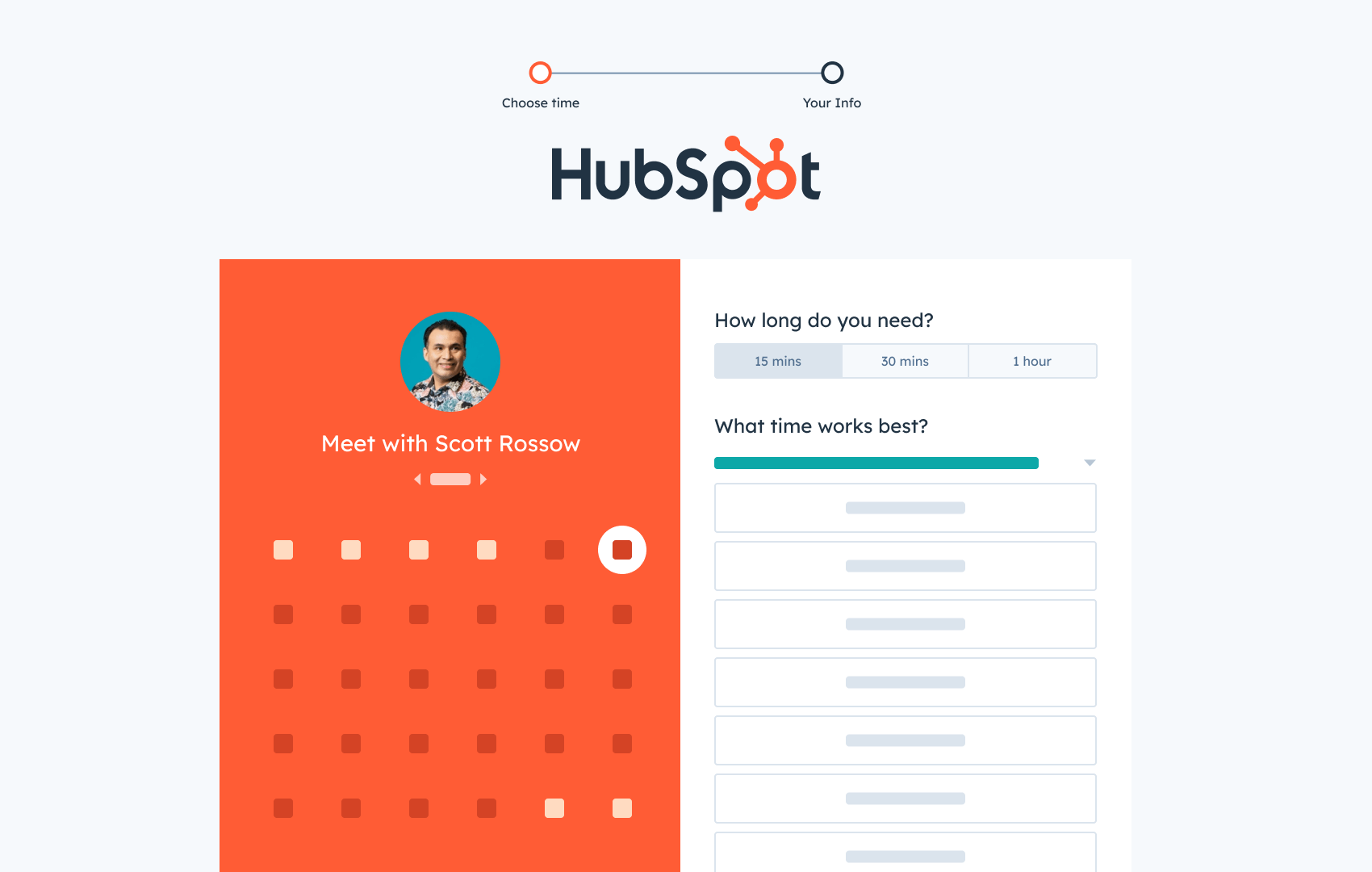
HubSpot's Free Meeting Scheduler
Schedule meetings faster and forget the back-and-forth emails. Your calendar stays full, and you stay productive.
- Let prospects book a meeting time
- Book more meetings and appointments
- Sync with Google and Office 365 Calendar
- And more!
Meetings