What is sales? Sales is the process of exchanging a product or service for money while helping the buyer solve a problem or reach a goal. In business, sales turns demand into revenue and can also help create demand for new products by identifying potential customers and showing how an offering meets their needs.

Sales can happen in a single online transaction or across months of prospecting, discovery, demos, negotiation, and follow-up. Below, I’ll explain the main types of sales, how the sales process and sales cycle work, common sales roles and terms, widely used methodologies, and the qualities that help salespeople succeed.
Table of Contents
- What is sales?
- Types of Sales
- The Sales Process: Key Stages
- Common Sales Terms
- Top Sales Methodologies
- Qualities of a Successful Salesperson
- Frequently Asked Questions About Sales
- Learn the art of sales.
What is sales?
Sales is the business function that turns qualified opportunities into customers and revenue. Sales differs from marketing because sales focuses on converting opportunities, while marketing focuses on attracting and nurturing demand.
A sales team builds the repeatable system behind that work. It defines target customers, manages the pipeline, forecasts likely results, and reviews lost deals to learn where the offer or process falls short. A sales representative works on individual opportunities. Depending on the role, that person may:
- Research and contact potential customers
- Qualify the buyer’s need, fit, authority, budget, and timeline
- Ask questions that uncover the cost of the current problem
- Explain or demonstrate the most relevant solution
- Coordinate decision-makers and answer objections
- Negotiate price, scope, and contract terms
- Record activity, agree on next steps, and hand the new customer to the delivery team
The foundation of an effective sales department is a sales strategy that targets customers the company can genuinely help. To define and reach those customers, sales and marketing work together to build an ideal customer profile (ICP) and coordinate how they attract, qualify, and support buyers.
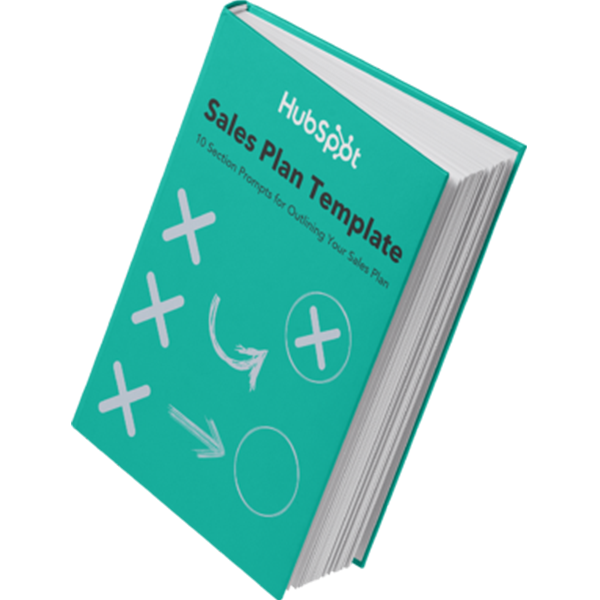
Free Sales Plan Template
Outline your company's sales strategy in one simple, coherent sales plan.
- Target Market
- Prospecting Strategy
- Budget
- Goals
Download Free
All fields are required.
Form not available
Types of Sales
- Inside Sales
- Outside Sales
- B2B Sales
- B2C Sales
- Business Development Sales
- Agency Sales
- Consultative Sales
- Ecommerce Sales
- Direct Sales
- Account-Based Sales
Inside Sales
Inside sales is remote selling by phone, email, video, social platforms, and other digital channels. Because reps don’t have to travel to every prospect, inside sales can help teams cover more accounts and standardize outreach. The model works especially well when buyers can evaluate an offering without an in-person visit, such as software-as-a-service (SaaS), ecommerce, and many technology services.
Inside Sales in Action: AT&T

AT&T sells wireless, internet, and other services to consumers and businesses through digital and phone channels. I think it’s a useful example of inside sales because a buyer can compare services, ask questions remotely, and complete much of the sales process without an in-person meeting.
Outside Sales
Outside sales happens primarily through in-person interactions away from a central office. Reps may visit customer sites, attend trade shows, run on-site demonstrations, and build relationships face-to-face. Companies often use outside sales when a product is complex, high-value, physical, or easier to evaluate in person.
Outside Sales in Action: Johnson & Johnson MedTech

Johnson & Johnson MedTech is a practical example because its medical-device sales programs combine product expertise with hands-on work alongside healthcare professionals. Its current MedTech Sales Training Representative program runs for 12 to 14 months and prepares participants for roles including associate account executive, associate sales representative, clinical sales specialist, and associate territory manager.
Those roles illustrate why outside sales can matter in MedTech: Current openings at Johnson & Johnson Clinical Sales include field-based work. At the same time, the company’s education programs emphasize direct, hands-on engagement with healthcare professionals.
B2B Sales
B2B stands for “business-to-business” and means selling from one business to another. These deals often involve larger contracts, longer approval cycles, and multiple stakeholders because the purchase can affect the buyer’s operations, budget, or technology stack. B2B companies can use inside sales, outside sales, or a mix of both.
In my experience, complex B2B industries like healthcare often rely on outside sales first and build inside sales capacity as demand grows.
B2B Sales in Action: GetAccept

GetAccept is a digital sales room and document-automation platform for revenue teams. I think it’s a straightforward example of B2B sales: It sells tools that help teams create proposals, collaborate with buyers, collect electronic signatures, and manage deal activity.
B2C Sales
B2C sales means selling from a business directly to an individual consumer. These transactions are often lower in price and complexity than B2B purchases, although that varies widely by product. We all encounter B2C sales when we shop at a store, subscribe to a service, buy online, or hire a personal service.
B2C Sales in Action: U-Pack

U-Pack sells long-distance moving services directly to consumers. I appreciate how simple its buying path is: Customers can get a quote online, reserve their move, choose service options, and get help from U-Pack consultants by phone or online. That makes U-Pack a clear B2C example without relying on assumptions about its advertising or internal sales process.
Business Development Sales
Business development supports pipeline creation by identifying potential accounts, researching buyers, and starting conversations. In many sales organizations, business development representatives (BDRs) focus on early-stage outbound prospecting and qualification before partnering with account executives or other closers on qualified opportunities.
When I was a BDR, I worked within both outside and inside sales. Most of the time, I built rapport with potential customers by connecting on LinkedIn and through cold email, then attended trade shows and events to meet them in person.
Business Development Sales in Action: Slack

Slack is business collaboration software sold to organizations. That makes it the kind of B2B product where business development can help identify relevant accounts, research decision-makers, and start early-stage conversations before a closer manages a qualified opportunity.
Agency Sales
Agency sales involves winning clients for services such as consulting, creative work, pay-per-click (PPC) advertising, or answer engine optimization (AEO). Sales cycles vary with scope, price, stakeholders, and approval requirements. One B2B lead-generation vendor reports that straightforward B2B service sales can take about 1 to 3 months, while high-value or complex deals can take 6 months or more.
In agency sales, clients are often signed under one of two commercial models:
- Project. The client buys a defined scope of work for a particular objective or period.
- Retainer. The client pays for ongoing work, providing the agency with recurring revenue and reducing its dependence on replacing completed projects.
Agency Sales in Action: UMG

UMG was founded in South Carolina by brothers Ramón and Gustavo Nieves. According to the agency’s current site, Ramón originally pursued leads and prospective clients while Gustavo built websites and handled billing and product management. UMG now describes itself as a million-dollar business with a team of about 20 and multiple clients on retainer, showing how project-based sales and recurring client work can coexist.
Consultative Sales
Consultative selling focuses on understanding the buyer’s needs before recommending a specific product or service. Instead of leading with a feature list, the rep asks questions, listens, and connects the solution to the individual buyer’s priorities.
In my opinion, consultative selling can — and should — be part of all sales models so the customer feels understood. It’s easier to sell a solution when you’re solving for the customer.
Consultative Sales in Action: Legacy Home Loans

I think consultative sales is especially useful for complex, high-value sales, such as choosing a mortgage lender. Loan amount, rate, fees, qualification, timing, and borrower goals can all shape the decision, so a rep has to understand the customer’s situation rather than rely on a generic pitch.
Legacy Home Loans currently has a national team of loan officers and describes its mission as helping customers build sustainable wealth through homeownership. That service model makes it a practical example of sales that depends on individual goals and one-to-one guidance.
Ecommerce Sales
Does your company sell products exclusively online? Can the customer research, choose, and purchase without speaking to a salesperson? If so, you’re using an ecommerce or online sales model.
Ecommerce is more self-service than many sales models, but the business still has to attract buyers, answer questions, reduce purchase friction, and convert demand online.
U.S. retail ecommerce sales continued to grow in 2026. In the second quarter, seasonally adjusted ecommerce sales reached $340.2 billion, accounting for 17.1% of total U.S. retail sales.
Ecommerce Sales in Action: Kissed By A Bee Organics

Kissed By A Bee Organics sells herbal remedies and handcrafted skincare products through its ecommerce site. Customers can browse the company’s products and shop online, making it a straightforward example of an ecommerce sales model.
Direct Sales
Direct sales means a company sells to the end customer without a third-party retail intermediary. The model can use company-owned channels or independent representatives, depending on how the business is structured.
Direct Sales in Action: Mary Kay

I had a brief stint in direct sales, selling Mary Kay beauty and skincare products. Mary Kay currently says its products are available online or in person exclusively through independent beauty consultants.
As a consultant, I helped my clients find the right products for their skin type, complexion, and desired look. I then purchased the products from Mary Kay and sold them to customers at retail.
Account-Based Sales
Account-based sales focuses sales effort on a defined set of high-value accounts and coordinates outreach around the people involved in each buying decision. In large enterprise accounts, sales, account management, customer success, and other specialists may collaborate across the relationship; the exact handoffs vary by company.
The goal is to understand the account’s priorities, stakeholders, and growth opportunities over time. A strong account-based approach can support retention and expansion, but it does not guarantee a higher customer lifetime value (LTV).
Account-Based Sales in Action: PepsiCo

PepsiCo sells through a wide range of customers, including distributors, foodservice businesses, grocery stores, convenience stores, mass merchandisers, membership stores, ecommerce retailers, and independent bottlers. Its 2025 Form 10-K states that Walmart and its affiliates, including Sam’s Club, accounted for about 14% of consolidated net revenue.
That scale makes PepsiCo a useful illustration of why major-account planning and relationship management matter without claiming that PepsiCo publicly labels its sales model “account-based sales.”
Free Sales Plan Template
Outline your company's sales strategy in one simple, coherent sales plan.
- Target Market
- Prospecting Strategy
- Budget
- Goals
Download Free
All fields are required.
Form not available
The Sales Process: Key Stages
The sales process begins with prospecting and continues through closing and follow-up. Together, these stages form the sales cycle and give reps a consistent path from lead to customer.

Prospecting
Prospecting identifies potential buyers who match the company’s target customer profile. Reps use prospecting techniques such as referrals, cold calling, email, social outreach, events, and research to start relevant conversations.
I recommend using a CRM once prospect volume grows beyond what a simple list can handle. A shared system keeps ownership, context, and next actions visible so that reps can follow up consistently rather than relying on memory.
Qualifying
Business development representatives (BDRs), sales development representatives (SDRs), or account executives may qualify leads by phone, email, or discovery. They assess need, fit, budget, buying authority, timing, and urgency. Poor-fit leads can be disqualified or moved back to nurture, helping reps focus on opportunities that match the company’s criteria.
Pro tip: Disqualifying a poor-fit lead is part of a healthy sales process. It protects the buyer’s time and gives reps more room to focus on opportunities they can genuinely help.
Discovery / Needs Analysis
During discovery, the rep learns how the buyer handles the problem today, what it costs, and what a better outcome should deliver. The lead becomes a credible opportunity once both sides confirm the problem and potential fit.
Demo or Proposal
The rep connects the offer to the buyer’s priorities through a demo, recommendation, or proposal. The strongest presentations focus on relevant outcomes, scope, proof, and next steps — not every available feature.
Negotiation
Both sides settle price, scope, timing, responsibilities, and contract terms. Good negotiation protects the deal’s value while addressing risks that could block approval.
Close
The opportunity becomes a closed-won deal once the buyer accepts the terms and completes the required agreement or payment. Closed-lost deals also matter because their reasons can expose gaps in qualification, positioning, or process.
Onboarding or Handoff
Sales passes the customer’s goals, commitments, stakeholders, and timeline to the team responsible for delivery. A thorough handoff prevents customers from repeating themselves and keeps sales promises from getting lost after signature.

Sales Hub works with HubSpot Smart CRM to help teams organize contacts, deals, activities, and follow-up across the sales cycle. Its deal pipeline tools show where each opportunity sits and what should happen next, making stalled deals and handoffs easier to see.

Common Sales Terms
Here are some common terms associated with sales and selling.
1. Salesperson
A salesperson is someone who performs activities involved in selling a product or service. Depending on the company and role, similar titles can include sales associate, seller, sales agent, sales rep, or sales representative.
2. Lead
A lead is a person or company that has shown some interest in your business, product, or service. Leads sit near the top of the sales funnel and may or may not be ready for direct sales engagement.
3. Prospect
A prospect is a lead that sales has identified as worth pursuing based on fit, relevance, or buying potential. Salespeople use prospecting techniques such as warm calls, email outreach, and social selling to connect with prospects. If the prospect shows clear fit and interest, the rep can use sales closing strategies to help move the opportunity toward a decision.
4. Sales Qualified Lead
A sales qualified lead (SQL) is a prospect who has been vetted and is ready for direct sales engagement. SQL criteria vary by company but typically include fit, buying intent, need, budget, authority, and timing.
5. Deal
A deal is a revenue opportunity that sales tracks through defined stages. In a CRM, a deal record can store information such as the buyer, expected value, stage, close date, activity, and next steps. Reps can also use deal plans to organize the work required to advance complex opportunities.
6. Sales Funnel
A sales funnel models how a broad group of potential buyers narrows as people move from initial awareness or interest toward a won or lost deal. Many contacts enter near the top; fewer become qualified opportunities; and a smaller share become customers.

7. Sales Pipeline
The sales pipeline is the seller-side view of active opportunities and their stages in the sales process. It shows where each deal sits, what should happen next, and how opportunities are progressing toward closed-won or closed-lost outcomes. For more current data, explore HubSpot’s sales statistics.

8. Sales Plan
A sales plan outlines goals, objectives, strategies, and tactics for a sales organization. It can include target customers, market conditions, revenue targets, pricing, team structure, and the activities sales teams will use to achieve their goals.
Top Sales Methodologies
A sales process defines the stages a rep moves through; a sales methodology provides a framework for how the rep approaches those stages. Here are six widely used sales methodologies.
Solution Selling
Current B2B buying research shows why solution selling matters: 6sense’s 2024 Buyer Experience Report found that about 70% of the buying journey happens before B2B buyers engage with sellers. Solution selling fits that reality by focusing the conversation on the buyer’s problem and how a tailored solution can address it rather than leading with a feature list.
In my opinion, the point is not to sell the “what” of the product but to show why the solution fits the customer’s needs.
Inbound Selling
With inbound selling, salespeople act as consultants, meeting prospects where they are and helping them solve relevant pain points. The goal is to focus on people who already show fit or intent, rather than indiscriminately pushing an offer. I find this approach pairs naturally with consultative selling and a soft sell.
Free Sales Plan Template
Outline your company's sales strategy in one simple, coherent sales plan.
- Target Market
- Prospecting Strategy
- Budget
- Goals
Download Free
All fields are required.
Form not available
SPIN Selling
SPIN selling structures discovery around four question types:
- Situation
- Problem
- Implication
- Need-payoff
The questions help the buyer articulate the current state, the problem, its consequences, and the value of solving it. In my B2B SaaS work, the right SPIN questions made the impact of an unresolved problem clearer and often increased the buyer’s urgency to act.
The Challenger Sale
The Challenger Sale uses a teach-tailor-take-control approach: teach the buyer something useful, tailor the message to the buyer’s context, and confidently guide the decision process. I think it’s a balanced approach to understanding the prospect while still moving the sale forward.
The Sandler System
The Sandler System treats qualification as a mutual-fit conversation. The rep acts as an advisor, asks questions to uncover pain, budget, decision process, and fit, and is willing to disqualify the opportunity. I appreciate how this changes the dynamic from persuading the buyer to jointly deciding whether a deal makes sense.
MEDDIC
MEDDIC is a qualification framework built around:
- Metrics
- Economic buyer
- Decision criteria
- Decision process
- Identify pain
- Champion
Reps use those categories to test whether an opportunity is real, understand the decision path, and identify the internal support needed to move forward.
Qualities of a Successful Salesperson
Strong salespeople tend to have communication, empathy, resilience, organization, and adaptability. In HubSpot’s 2025 State of Sales report, sales professionals named understanding customer goals (42%), providing consistent value (39%), and building trust (30%) as the top drivers of repeat sales and upsells. Six qualities worth developing include:
- Communication. Explain value in the buyer’s language, ask direct questions, and confirm next steps without hiding behind jargon.
- Empathy. Listen for what the buyer says and what they avoid saying. That context helps the rep recommend the right fit rather than pushing the most expensive option.
- Resilience. Recover from rejection without becoming pushy or taking every lost deal personally. Learn why the deal failed and adjust.
- Organization. Keep notes, follow-ups, stakeholders, and deadlines up to date. Trust disappears quickly when a rep forgets a commitment or asks the same question twice.
- Adaptability. Change the message, channel, or pace when the buyer’s needs shift. A script should guide the conversation, not trap it.
- Curiosity. Dig past the first answer to understand the problem, its impact, and the decision process. Better questions usually uncover more value than a longer pitch.
For more ways to build these abilities, explore HubSpot’s sales skills guide.
You can hire talented reps and give them a solid process, but they won’t operate as a great team without trust, collaboration, recognition, and room to grow. Learn how to build a high-performing, healthy sales culture.
Frequently Asked Questions
What is sales in simple words?
Sales is the process of helping someone choose and buy a product or service in exchange for money. A salesperson identifies a need, explains the value of a suitable solution, and helps the buyer complete the purchase.
What are the 7 keys of selling?
There is no single universal list, but seven practical keys are prospecting, qualifying, discovery, presenting a solution, negotiation, closing, and follow-up. Together, they move a potential buyer from initial contact toward a confident purchase and successful handoff.
What exactly is a sales job?
A sales job involves finding potential customers, understanding their needs, recommending a suitable solution, and helping them complete a purchase. Depending on the role, a rep may also prospect, run demos, negotiate contracts, manage accounts, or update a CRM.
Learn the art of sales.
Strong sales solves a real problem for the right customer. The best reps listen closely, recommend honestly, and make the path to purchase easier — even when the right answer is “not yet.” A repeatable process keeps that customer context from getting lost. If you’re ready to put those fundamentals into practice, HubSpot’s free CRM can help you organize contacts, deals, and follow-up in one place.
Editor’s note: This post was originally published in April 2020 and has been updated for comprehensiveness.
Free Sales Plan Template
Outline your company's sales strategy in one simple, coherent sales plan.
- Target Market
- Prospecting Strategy
- Budget
- Goals
Download Free
All fields are required.
Form not available
Sales Strategy
.png)

![7 key sales challenges to prepare for in 2026 [+ how you can overcome them]](https://53.fs1.hubspotusercontent-na1.net/hubfs/53/sales-challenges-1-20251023-788058.webp)
![How B2C sales could shift in a recession [new data]](https://53.fs1.hubspotusercontent-na1.net/hubfs/53/Recession%20sales%20strategies%20(1).png)
![22 Best Sales Strategies, Plans, & Initiatives for Success [Templates]](https://53.fs1.hubspotusercontent-na1.net/hubfs/53/Best-Sales-Strategies-1.png)

![What Is Cross-Selling? Intro, Steps, and Pro Tips [+Data]](https://53.fs1.hubspotusercontent-na1.net/hubfs/53/ft-cross-selling.webp)